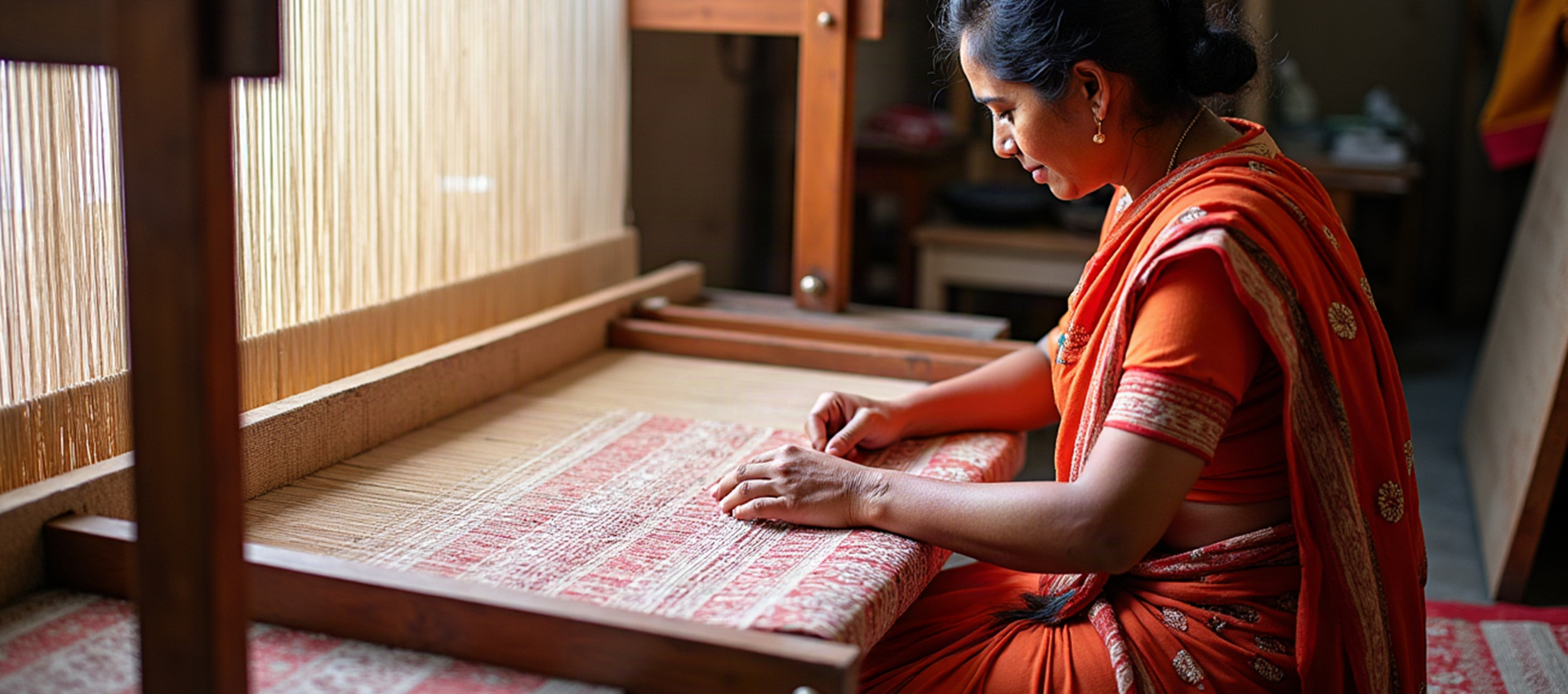
Scroll through Instagram or Pinterest today and you’ll notice something interesting — saree trends are no longer just designer-led; they are increasingly AI-amplified. Algorithms now decide what goes viral, what looks “luxury,” and what suddenly becomes the next must-have drape. While this tech-powered fashion discovery can be exciting, it can also be misleading, especially for conscious buyers who value craftsmanship, comfort, and timeless elegance.
For modern saree lovers — particularly women who are rediscovering handloom — it’s important to separate algorithm hype from authentic style. Because let’s be honest: not everything trending is worth investing in. One of the biggest advantages of AI in fashion is speed.
Trend prediction tools can analyze millions of images and identify emerging color palettes, draping styles, and fabric preferences within days. This helps brands respond quickly and gives shoppers more variety than ever before. For busy women, this means easier discovery and personalized recommendations that actually match their taste.
However, the downside is equally significant. AI often rewards what is visually loud rather than what is practically wearable. Many sarees that go viral online look stunning in curated photos but fail the real-life test of comfort, repeat wear, and long-term value. The result? Impulse purchases that sit in wardrobes after just one outing. Another AI-driven trap is the rise of overly experimental draping styles being pushed as “the future of sarees.”
While innovation has its place, many of these drapes are impractical for everyday wear, family functions, or long events. They photograph beautifully but demand constant adjustment, pins, and styling support. For women who want elegance without fuss, these trends can quickly become frustrating. There is also the growing concern of synthetic-heavy fabrics being promoted aggressively because they photograph well under studio lighting.
AI platforms tend to favor sheen, gloss, and high-contrast textures, which often sidelines breathable, handwoven fabrics like Bengal cotton, linen, and authentic handloom silks. The irony is that while these natural fabrics may appear subtle on screen, they outperform synthetics in comfort, durability, and grace — especially in the Indian climate.
That said, AI is not the villain. When used wisely, it can help customers discover regional weaves, understand styling possibilities, and explore color combinations they may never have considered. It can also empower niche brands like Antarang to reach the right audience without massive advertising budgets. The key lies in mindful consumption.
Smart saree buyers in 2026 are learning to pause before purchasing purely because something is trending. They are asking better questions: Is this wearable beyond the photoshoot? Does the fabric breathe? Will this still look elegant two years from now? Does it reflect craftsmanship or just clever marketing? Timeless saree style has always been rooted in authenticity — handloom textures, thoughtful drapes, and fabrics that move with the body rather than against it.
AI may accelerate trends, but it cannot replace the quiet luxury of a well-made saree. For brands like Antarang that celebrate handcrafted elegance, this shift is actually an opportunity. As fast trends come and go, discerning buyers are returning to pieces that tell a story, feel comfortable, and remain relevant season after season. The future of saree fashion will likely be a blend of intelligent technology and conscious craftsmanship.
The winners will not be the loudest trends, but the most wearable, breathable, and emotionally resonant pieces. So the next time an AI-fed trend floods your feed, admire it — but choose wisely. Your wardrobe deserves longevity, not just likes.
Explore timeless handcrafted sarees that never go out of style at www.myantarang.com
The Complete Guide to Banarasi Sarees: 10 Types Every Saree Lover Should Know
September 28th, 2026
11 Fascinating Facts About Banarasi Sarees You Probably Never Knew
September 24th, 2026
Real vs Fake Banarasi Saree: 9 Ways to Spot Authentic Handloom Weaving
September 17th, 2026
Jacquard Weaving Explained: Why Jacquard Does NOT Mean Powerloom
September 10th, 2026