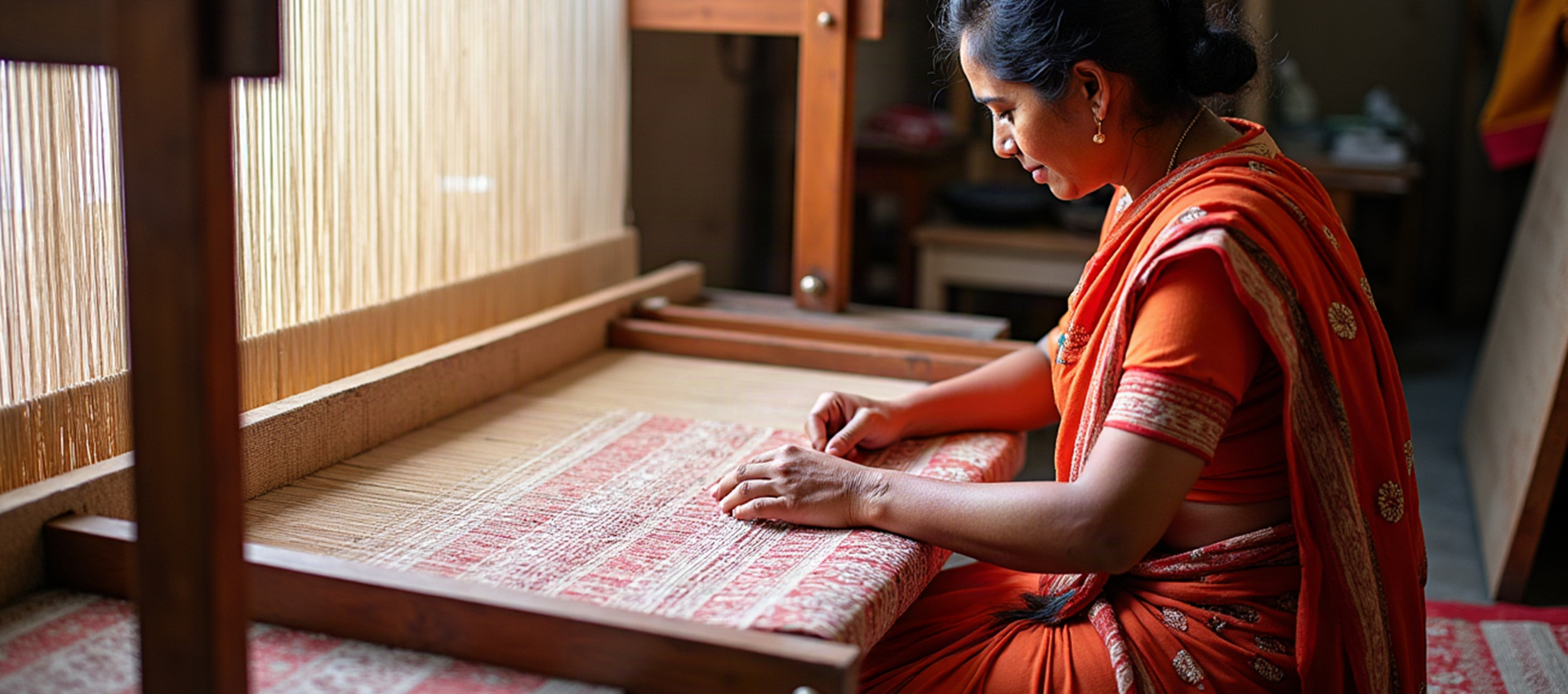
For anyone who truly loves sarees, the magic of the drape is everything. The way the pleats fall neatly, the grace of the pallu, and the effortless elegance of the silhouette are what make a saree timeless. Yet behind this beautiful drape lies a small detail that many people overlook — the fall and edging.
For decades, these two finishing touches have quietly played a crucial role in how a saree behaves when worn. However, in the age of fast fashion and instant deliveries, fall stitching and edging are sometimes dismissed as optional or merely routine. In reality, they are anything but.
The fall of a saree refers to the strip of fabric stitched along the inner bottom edge of the saree, usually made of sturdy cotton. Its purpose may appear simple, but its impact on the saree’s drape is significant. By adding a bit of weight to the lower edge, the fall helps the saree hang smoothly and maintain its shape. Without it, the saree may feel lighter but often loses the structured elegance that makes pleats look crisp and graceful.
One of the most immediate benefits of a properly stitched fall is improved drape. When the saree is tucked and pleated, the added weight allows the fabric to settle naturally rather than flutter or bunch up. This is particularly important for lighter fabrics such as chiffon, georgette, organza, or soft cottons, which can otherwise feel difficult to control during draping.
Edging, on the other hand, serves as the protective boundary of the saree. The delicate hem at the edge prevents fraying and ensures the fabric maintains its integrity over time. Think of it as the saree’s protective frame — subtle yet incredibly important. Without proper edging, even the finest fabric can begin to wear out faster with repeated use and washing.
Durability is another major reason fall and edging should never be skipped. The bottom edge of a saree experiences the most friction as it brushes against the floor while walking. The fall acts as a protective layer that absorbs this friction, preventing the main fabric from wearing out prematurely. This simple addition can significantly extend the life of the saree, making it a far more sustainable wardrobe choice.
At the same time, it is worth acknowledging that some modern saree buyers prefer skipping the fall to maintain an ultra-light feel, especially for casual or quick wear. In certain contemporary fabrics or experimental styles, this approach may work temporarily. However, over time, many women notice that the saree does not drape as elegantly or maintain its structure without that foundational support.
Another small but meaningful advantage of fall stitching is the confidence it brings while wearing the saree. A well-finished saree stays in place better, allowing the wearer to move freely without constant adjustments. For long events, celebrations, or busy days, this stability can make a remarkable difference in comfort and ease.
In the world of handcrafted sarees, details like fall and edging reflect a deeper philosophy of care. They represent the finishing touches that transform a piece of fabric into a garment designed to last, move beautifully, and accompany the wearer through many occasions.
For the Antarang woman, who appreciates both elegance and practicality, these small details are part of what makes a saree truly complete. A thoughtfully finished saree not only looks better but also becomes a trusted piece in the wardrobe — something you reach for again and again.
As fashion evolves and new trends emerge, the fundamentals of a great saree remain unchanged. Good fabric, careful craftsmanship, and thoughtful finishing will always define timeless style.
Because sometimes the smallest stitches hold the biggest secrets.
The Complete Guide to Banarasi Sarees: 10 Types Every Saree Lover Should Know
September 28th, 2026
11 Fascinating Facts About Banarasi Sarees You Probably Never Knew
September 24th, 2026
Real vs Fake Banarasi Saree: 9 Ways to Spot Authentic Handloom Weaving
September 17th, 2026
Jacquard Weaving Explained: Why Jacquard Does NOT Mean Powerloom
September 10th, 2026