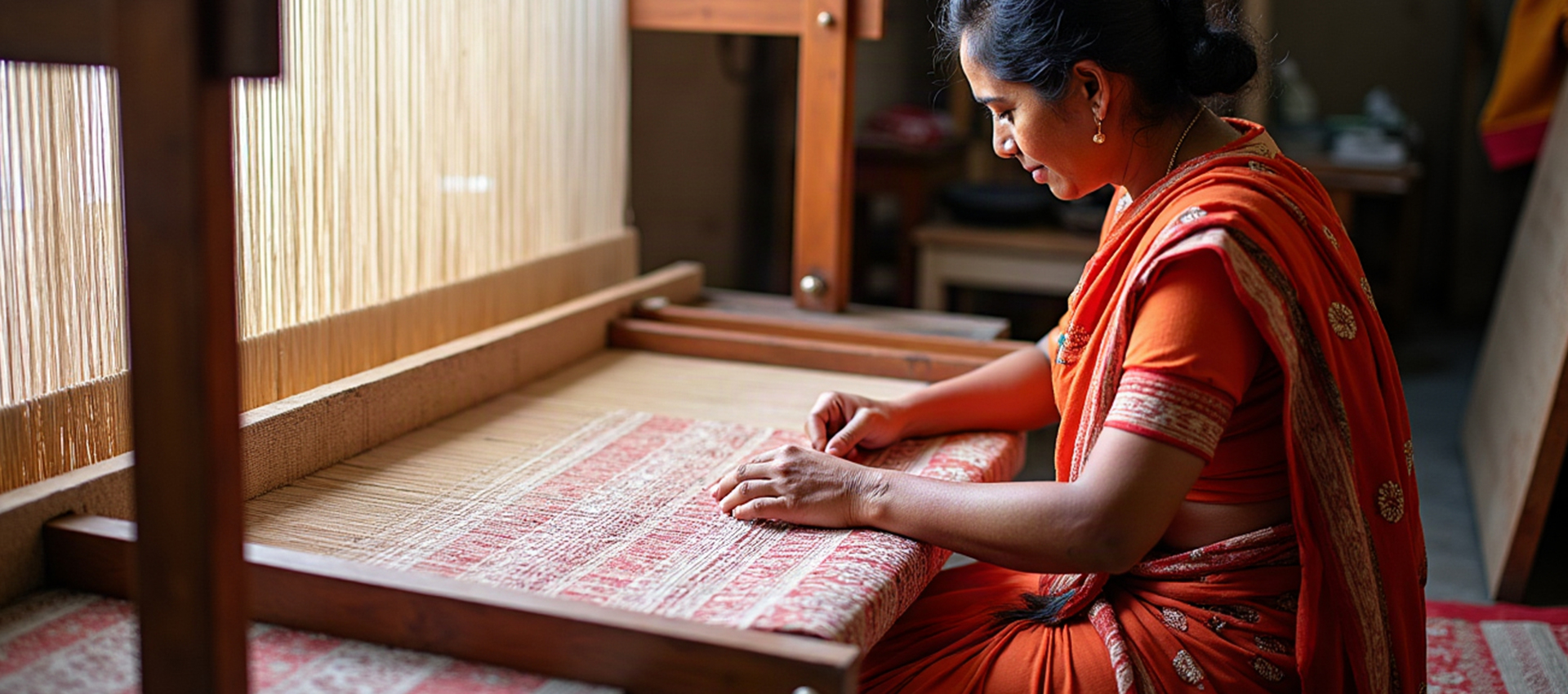
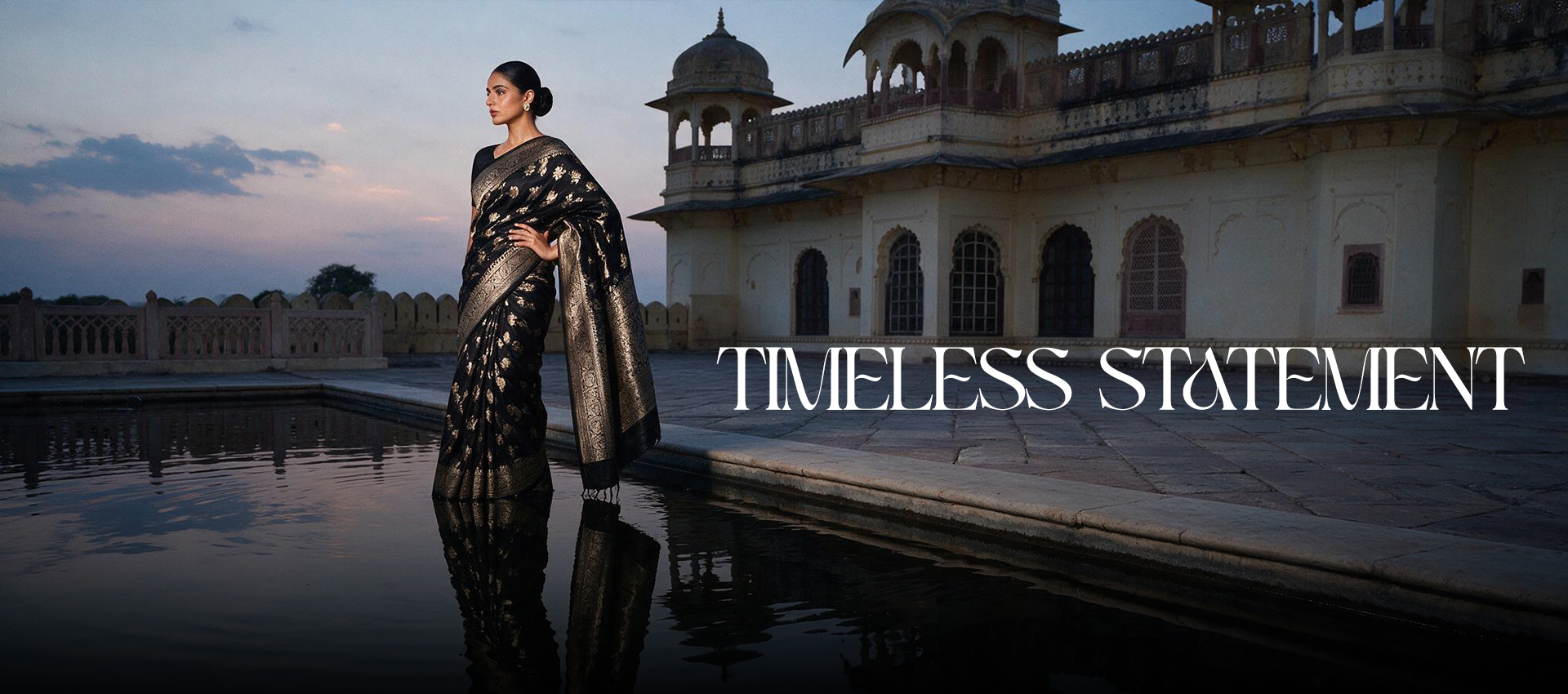
When buying a saree today, most women unknowingly choose between two very different worlds—one driven by speed, factory efficiency, and mass output, and the other guided by patience, skill, and centuries-old tradition. Handcrafted sarees belong firmly to the second world. They are shaped by hours or even weeks of dedicated human effort, where artisans carefully weave, dye, and finish each piece using techniques refined through generations of practice. Every handcrafted saree carries subtle variations in motifs, textures, and colors that act as quiet signatures of the human hand behind it. These variations are not imperfections; they are proof of authenticity, making every saree truly one of a kind. In contrast, mass-produced sarees rely on automated machines programmed for uniformity, speed, and replication. While they may look flawless at first glance, they lack depth, character, and individuality.
Handcrafted sarees are most often created using natural fibers such as cotton, silk, linen, and wool. These materials breathe well, feel gentle on the skin, and adapt comfortably to different climates. Over time, natural fabrics soften, develop character, and age gracefully. With proper care, a handcrafted saree can remain beautiful for decades and is often cherished as an heirloom. Mass-produced sarees, on the other hand, frequently use synthetic or blended fabrics chosen primarily for cost efficiency. These materials may appear attractive initially but tend to lose shape, fade quickly, and feel uncomfortable over extended wear. Their shorter lifespan encourages repeated purchasing, contributing to waste and higher long-term costs.
Sustainability is another powerful reason handcrafted sarees stand apart. Traditional handloom processes use minimal electricity, rely heavily on manual skill, and often incorporate natural or low-impact dyes. The environmental footprint of such production is significantly lower compared to industrial manufacturing. Mass production depends on large factories, heavy machinery, chemical treatments, and water-intensive processes that generate substantial pollution and textile waste. Choosing handcrafted sarees is therefore a meaningful step toward supporting slow fashion and reducing environmental harm.
Equally important is the human impact behind handcrafted textiles. Each saree supports the livelihood of artisans and their families, many of whom live in rural or craft-centered communities. Purchasing handcrafted sarees helps sustain traditional skills that are at risk of disappearing in a fast-fashion-driven world. It also encourages fairer wages and more dignified working conditions. In contrast, mass-produced garments are often linked to anonymous supply chains where labor practices can be exploitative and disconnected from the end consumer.
From an aesthetic perspective, handcrafted sarees possess a richness that machines cannot imitate. The depth of handwoven patterns, the organic flow of designs, and the warmth of natural colors create a visual experience that feels alive rather than manufactured. Trends may change rapidly, but handcrafted sarees retain a timeless appeal that transcends seasons. They do not shout for attention; they quietly command it.
There is also an emotional dimension to handcrafted sarees that mass-produced garments rarely offer. When you wear a handcrafted saree, you are wearing a story. You are wearing hours of focused labor, inherited knowledge, and cultural heritage woven into fabric. This awareness creates a deeper connection with what you wear, transforming clothing from a disposable item into something meaningful and personal.
Although handcrafted sarees may appear more expensive at first glance, their true value becomes clear over time. Their durability, versatility, and timeless design make them cost-effective in the long run. A single well-made handcrafted saree can be styled in multiple ways, worn on numerous occasions, and cherished for years. Mass-produced sarees, despite lower upfront prices, often require frequent replacement, resulting in higher cumulative spending.
Choosing handcrafted sarees is ultimately a choice of intention. It is a decision to value quality over quantity, meaning over convenience, and tradition over trend. It is a way to express personal style while supporting sustainability, ethical practices, and cultural preservation. For women who seek sarees that feel special, last longer, and carry depth beyond appearance, handcrafted sarees are not just better than mass-produced ones—they are in a class of their own.
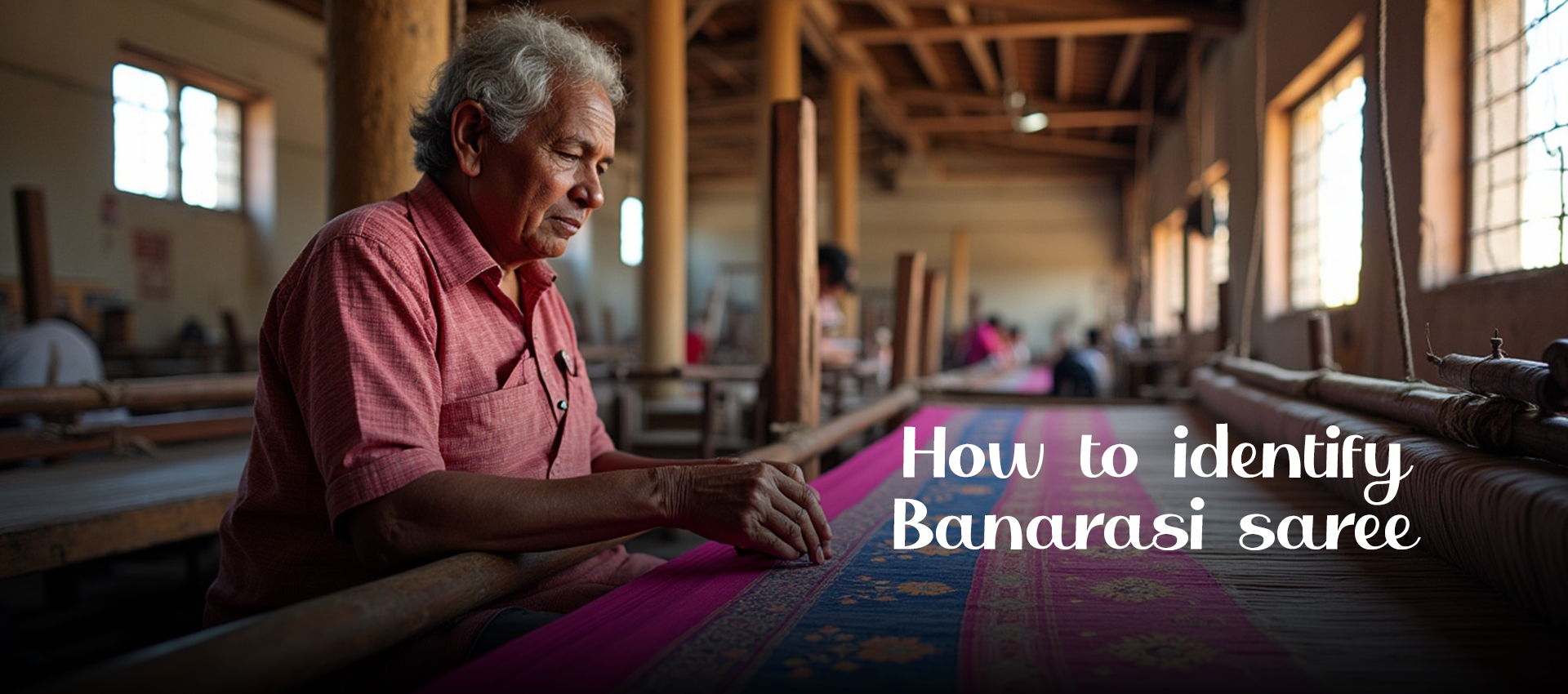
Real vs Fake Banarasi Saree: 9 Ways to Spot Authentic Handloom Weaving
September 17th, 2026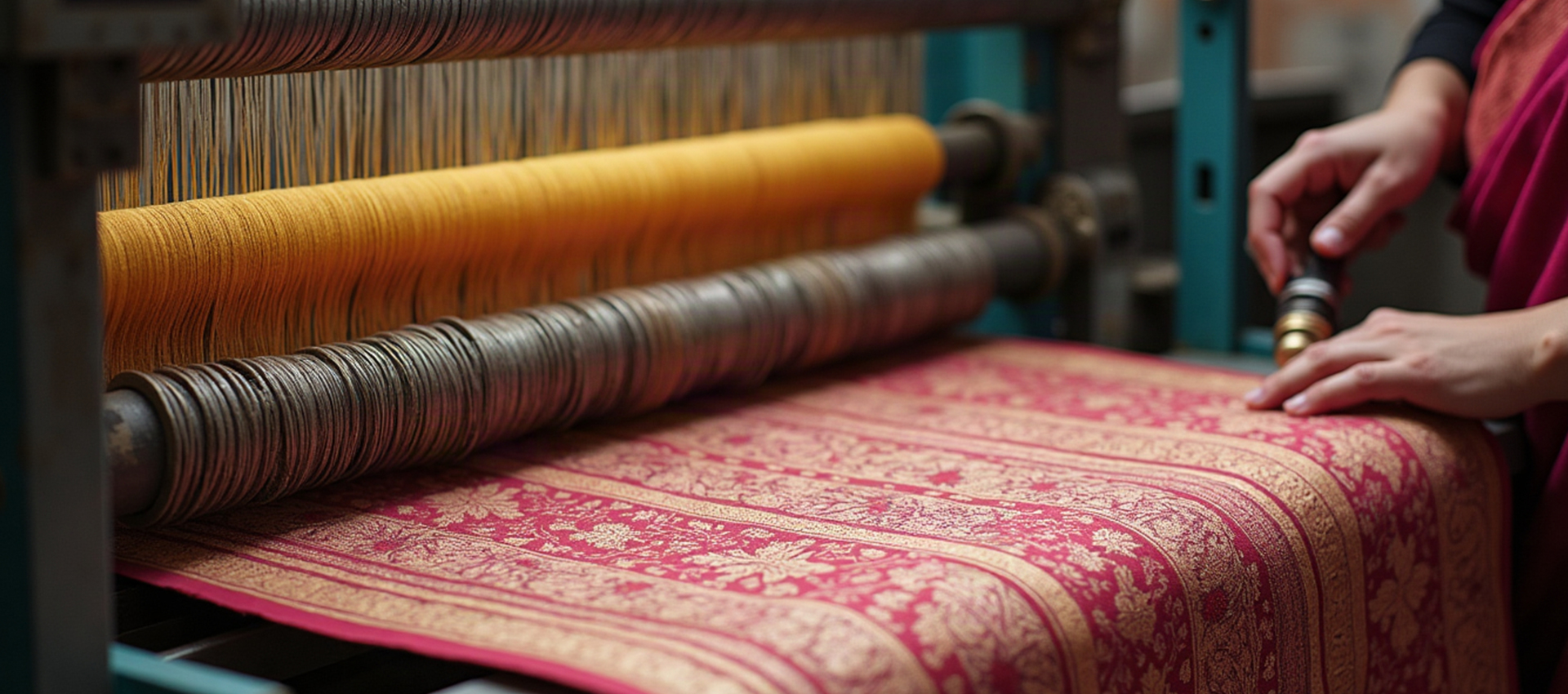
Jacquard Weaving Explained: Why Jacquard Does NOT Mean Powerloom
September 10th, 2026
The Origin of Linen Sarees in India: From Ancient Flax to Handloom
September 2nd, 2026