Why the handloom sector is leading the sustainability conversation
In a global fashion industry responsible for approximately 10 percent of annual carbon emissions and 20 percent of industrial water pollution, handloom weaving was already ahead of the curve before sustainability became a marketing term. The traditional handloom loom runs on no electricity. It produces near-zero textile waste during weaving. Its output is biodegradable, made from natural fibres, and built to last decades rather than seasons. These are not design choices — they are simply the way handloom has always worked.
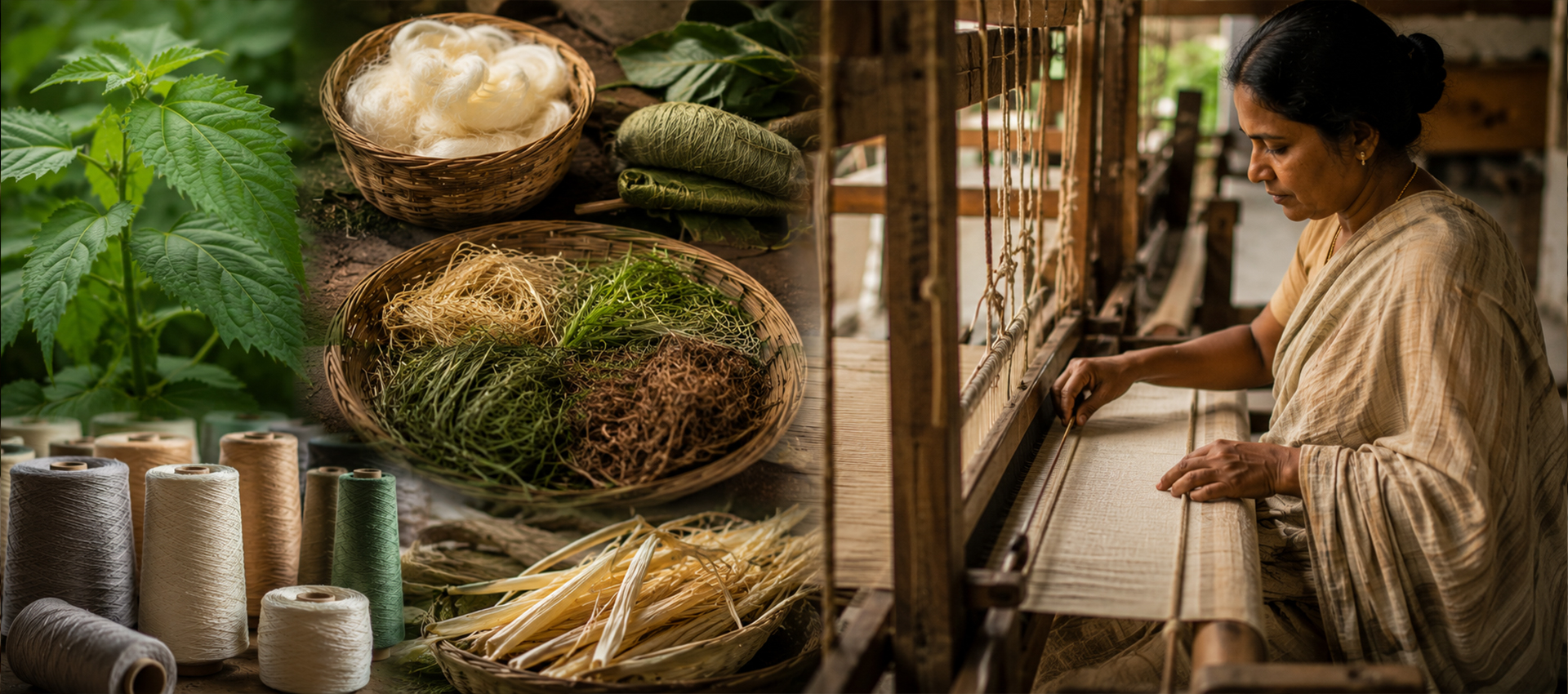
But a new generation of weavers, textile designers, and material innovators across India is taking that baseline of sustainability and pushing it further — experimenting with fibres that were previously considered agricultural waste, developing weaving techniques for materials that have never been used on a loom before, and creating textiles that address the twin demands of ecological responsibility and contemporary design. The results are extraordinary, and they are beginning to find their way into the sarees, dupattas, and fabric lengths that conscious buyers are choosing with increasing deliberateness.
Banana fibre: turning agricultural waste into wearable luxury
India is the world's largest banana producer, and banana cultivation generates an enormous volume of agricultural waste — the stems and pseudo-stems of the plant, which are typically discarded or burned after harvest. These stems contain long, strong cellulosic fibres that, when extracted and processed correctly, produce a textile material with properties that rival and in some ways exceed conventional natural fibres.
Banana fibre is naturally lustrous — it has a sheen similar to silk — while being significantly stronger than cotton. It is highly absorbent, breathes well in heat, and is fully biodegradable. In India, banana fibre extraction has deep roots in South Indian craft traditions, particularly in Kerala and Tamil Nadu, where it was historically used for rope-making and coarse fabric. The innovation of the past decade has been in refining the extraction and spinning processes to produce fibre fine enough for handloom weaving — creating sarees and dress fabrics that combine the luxurious appearance of silk with the sustainability credentials of zero-waste agricultural by-product utilisation.
Handloom weavers in Andhra Pradesh and Tamil Nadu have been among the first to integrate banana fibre into traditional saree formats — weaving it in combination with cotton for lightweight daily-wear fabrics, or with silk for textured, occasion-appropriate pieces that have a distinctive organic quality unlike anything else on the market. A banana fibre saree is not just a sustainable choice — it is a genuinely novel textile experience.
Lotus fibre: the rarest sustainable textile in the world
If banana fibre is the accessible frontier of sustainable textile innovation in India, lotus fibre occupies the opposite end of the spectrum — rare, labour-intensive, and producing a cloth of such singular beauty that it commands significant premiums even in international luxury markets.
Lotus fibre is extracted from the stems of the lotus plant — the same sacred flower that has appeared in Indian iconography for millennia. Inside each stem are fine, thread-like fibres that can be pulled out by hand and, through a painstaking manual process, twisted into a yarn fine enough to weave. The extraction window is narrow: the stems must be processed within hours of cutting, before the fibres dry out and become too brittle to spin. This means lotus textile production is inherently artisanal and small-batch — it cannot be scaled or mechanised without destroying the quality that makes it remarkable.
The resulting fabric has a quality that no other natural fibre replicates: cool, slightly crisp, extraordinarily lightweight, and with a faint natural fragrance that diminishes gradually with washing. Myanmar has the longest tradition of commercial lotus weaving, but Indian artisans — particularly in Manipur and West Bengal, where lotus cultivation is extensive — are actively developing their own lotus weaving traditions. A lotus fibre saree or dupatta is among the most ethically and ecologically pure textiles it is possible to own: zero chemical processing, zero waste, zero ecological footprint beyond the water the lotus plant purifies naturally as it grows.
"Lotus fibre may be the world's most sustainable luxury textile. The plant grows in water, purifies it, requires no pesticides, produces no waste, and its stems — usually discarded — contain a fibre of extraordinary fineness. It is a closed loop that nature designed and artisans perfected."
Nettle fibre: the Himalayan alternative to linen
Himalayan nettle — Girardinia diversifolia — has been used for clothing and rope-making by communities in the hill regions of Uttarakhand, Himachal Pradesh, and the Northeast for centuries. The plant grows wild and abundantly in forest margins at altitude, requires no cultivation, no irrigation, and no pesticides, and has the remarkable ability to regenerate from its roots after harvesting, making it a genuinely renewable fibre source that does not compete with food crops for agricultural land.
Nettle fibre has properties remarkably similar to linen — it is strong, naturally antibacterial, breathable, and produces a fabric that softens significantly with washing and wear. The extraction process, which involves retting the stalks to loosen the bast fibres and then hand-processing them into spinnable lengths, is labour-intensive but produces a fibre of real quality. Contemporary textile innovators working in partnership with Himalayan communities are developing nettle sarees and fabric lengths that bring this wild-harvested fibre into the mainstream handloom market — combining traditional community knowledge with design sophistication that speaks to urban conscious buyers.
11 Fascinating Facts About Banarasi Sarees You Probably Never Knew
September 24th, 2026
Real vs Fake Banarasi Saree: 9 Ways to Spot Authentic Handloom Weaving
September 17th, 2026
Jacquard Weaving Explained: Why Jacquard Does NOT Mean Powerloom
September 10th, 2026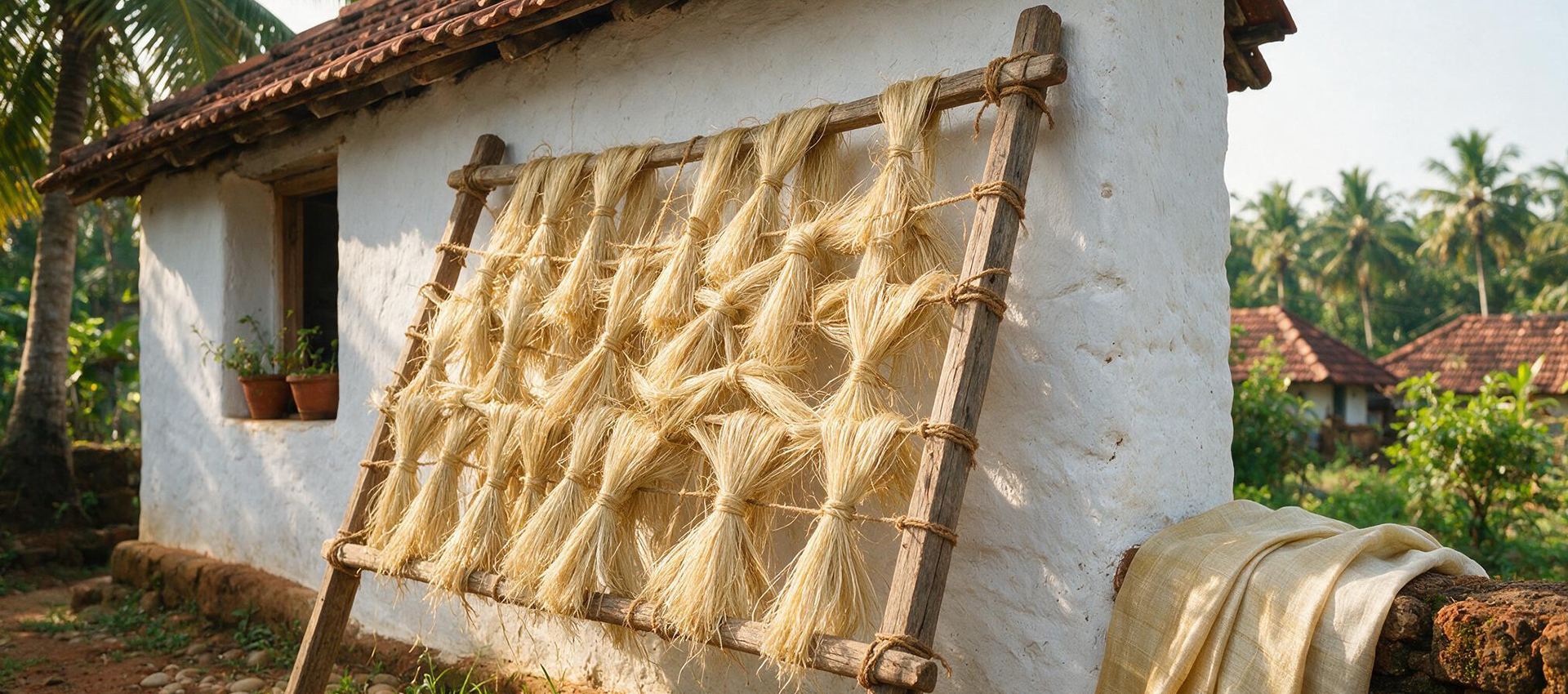
The Origin of Linen Sarees in India: From Ancient Flax to Handloom
September 2nd, 2026