Why this comparison matters more than you think?
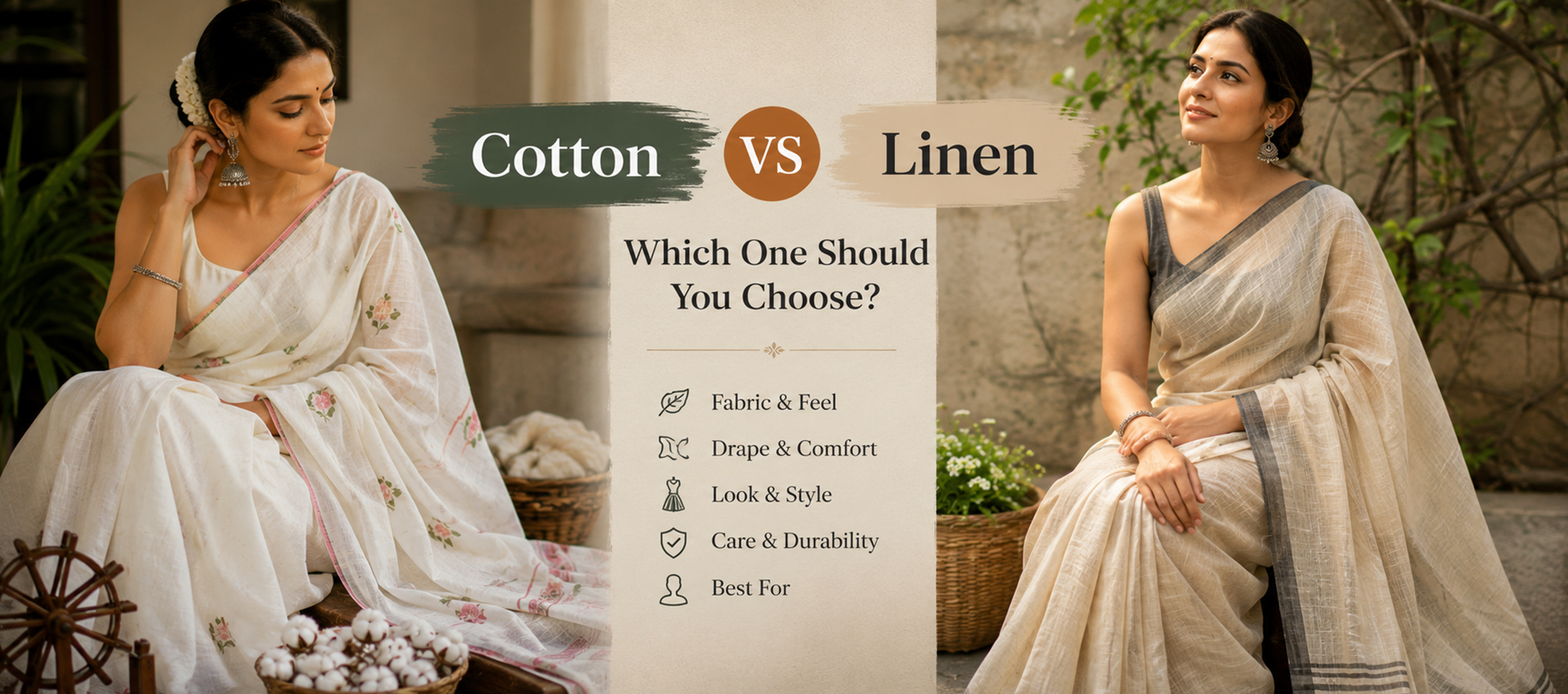
The Indian saree market is flooded with options, and natural-fibre sarees have seen a quiet but powerful resurgence over the last decade. Women who once defaulted to silk for occasions and synthetic blends for everyday wear are now reaching for cotton and linen — and for good reason. Both fabrics are sustainable, biodegradable, skin-friendly, and rooted in India's long textile tradition. But they have distinctly different personalities, and dressing well means understanding those differences before you buy.
Cotton and linen are frequently grouped together under the umbrella of "natural fibres," which creates the impression that they behave similarly. They do not. The differences in how they feel against the skin, how they hold a drape, how they respond to heat and moisture, how they age, and what occasions they are best suited to are significant enough to make the choice genuinely consequential — especially when you are investing in a handloom piece that is meant to last years.
Understanding cotton sarees: the everyday essential
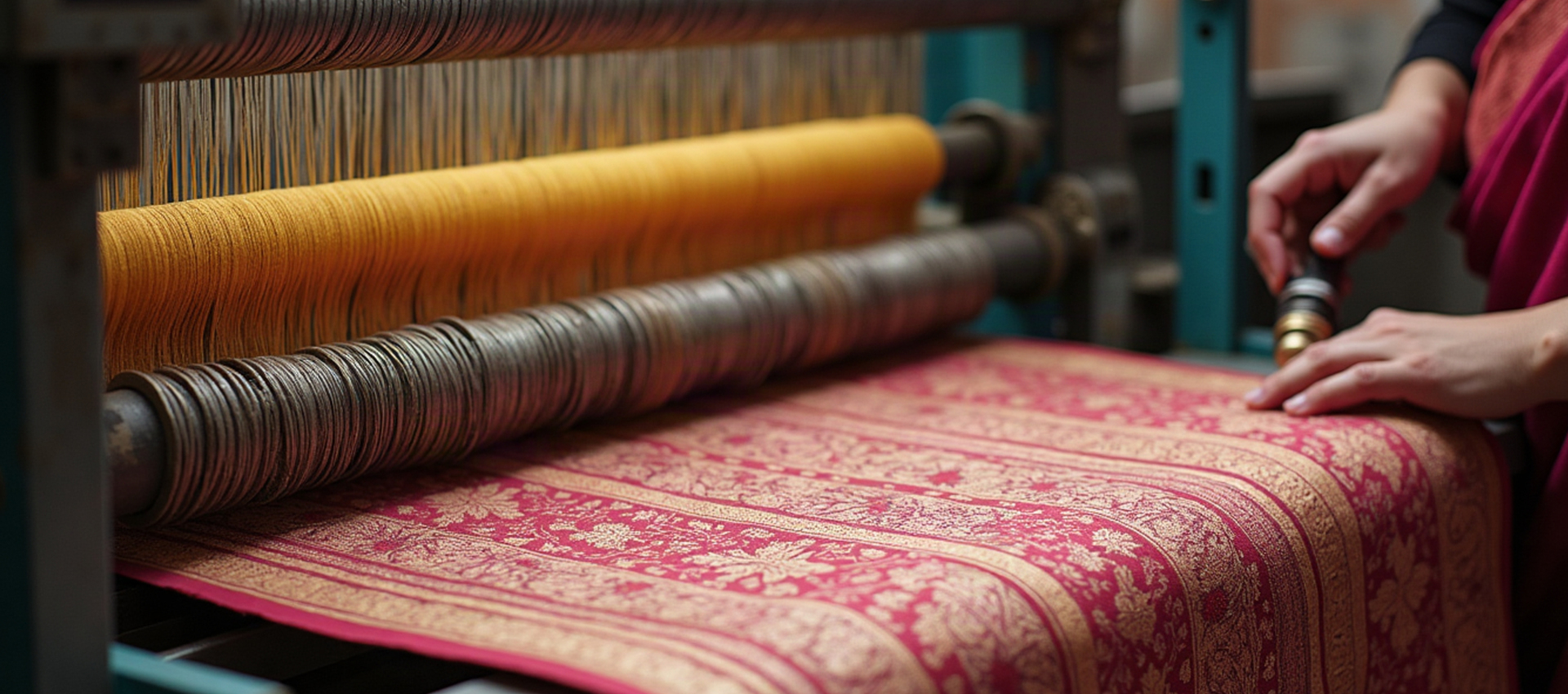
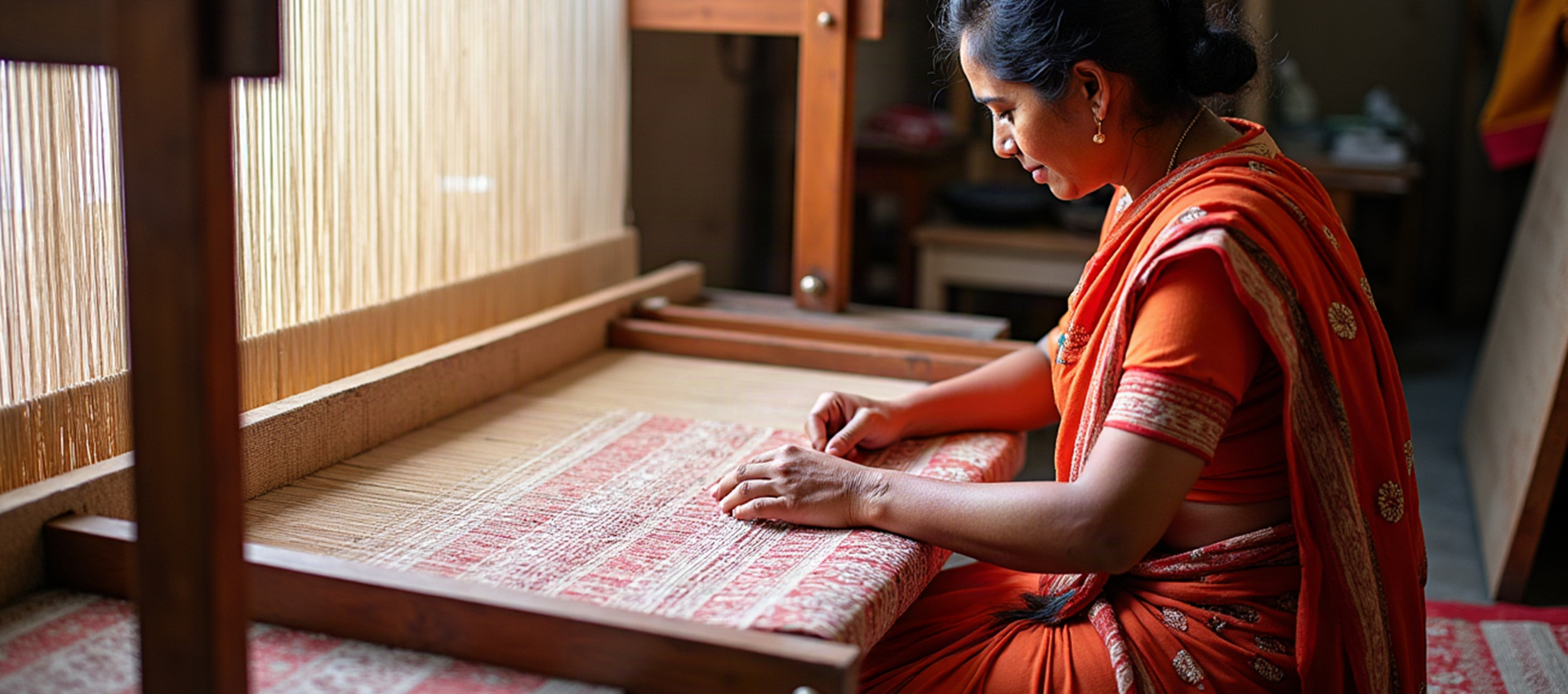
Cotton is India's most democratic fabric. It has clothed this subcontinent for over five thousand years — from the fine muslins of the Mughal courts to the handspun khadi of the freedom movement to the everyday handloom cottons woven today in Bengal, Andhra, Odisha, and Tamil Nadu. Cotton sarees are not a single thing; they are an entire universe. There is the gossamer lightness of Jamdani, the starchy crispness of Mangalagiri, the earthy weight of Ilkal, the crisp geometry of Gadwal, and the cool softness of a simple Kota weave — all cotton, all completely different in character.
What unites all cotton sarees is the fibre itself. Cotton is a cellulosic fibre with a naturally hollow structure that allows it to absorb moisture readily — up to 27 times its own weight — and release it through evaporation, creating a cooling effect on the skin. This is why a cotton saree worn on a humid June afternoon in Delhi feels genuinely comfortable in a way that no synthetic fabric can replicate. The fibre breathes with the body rather than trapping heat against it.
Cotton sarees are also exceptionally easy to manage. They can be hand-washed or machine-washed on gentle cycles, they take dye beautifully and hold colour well with proper care, they soften and improve with each wash, and they are forgiving of imperfect draping — a slightly off-pleat in a cotton saree looks artfully casual rather than dishevelled. For a woman building a working wardrobe of sarees she can wear confidently every day, cotton is almost always the foundation.
Understanding linen sarees: the fabric that thinks it is luxury
Linen comes from the flax plant — one of the oldest cultivated crops in human history — and it has a texture and presence that is immediately distinct from cotton. Where cotton is soft and yielding, linen is crisp and structural. Where cotton drapes fluidly, linen holds its shape. Where cotton blends into the background of an outfit, linen makes a statement through texture alone.
The fibre itself is stronger than cotton — linen becomes more durable, not less, with washing, and a well-cared-for linen saree will outlast most other fabric choices by a significant margin. Linen also has exceptional moisture-wicking properties: it can absorb up to 20 percent of its weight in moisture before it feels damp, and it dries significantly faster than cotton, making it an excellent choice for humid coastal climates where cotton can sometimes feel clammy once saturated.
The tactile quality of linen is its most distinctive characteristic. It has a slight natural roughness — a texture that fashion people call "hand" — that is immediately apparent to the touch and visible in how light plays across the fabric. This texture is also why linen sarees have a natural, effortless elegance that requires very little styling effort. A well-chosen linen saree in a soft natural shade looks polished and considered even when draped quickly. It has what no cotton saree quite achieves: a quiet, confident luxuriousness that does not announce itself.
The caveat with linen is creasing. Linen wrinkles readily and visibly — this is simply a property of the fibre and cannot be engineered away without chemical treatments that compromise the fabric's integrity. Many linen lovers consider the creasing part of the aesthetic — a lived-in, relaxed quality that reads as intentional rather than careless. But if you are someone who finds visible creases on clothing distressing, linen will require a higher management threshold than cotton.
How they drape: the difference you feel every time you wear them
Draping is where the personality difference between cotton and linen becomes most tangible. Cotton, particularly in finer weaves, drapes fluidly and softly — it follows the body's movement rather than resisting it. Thin cotton sarees like Jamdani or Kota create elegant, flowing pleats that move gracefully. Heavier handloom cottons have more body and create structured pleats that hold throughout the day without constant adjustment.
Linen drapes with more stiffness and sculptural quality. The pleats of a linen saree are crisper and more defined, and the fabric tends to maintain its form better over the course of a long day. However, linen can be less forgiving in humid conditions where the fabric softens with absorbed moisture, sometimes causing the pleats to lose their initial precision. The pallu of a linen saree typically holds a more architectural, draped quality rather than the fluid fall of fine cotton — which many women find more flattering and easier to manage, particularly those who are still building confidence with draping.
For beginners learning to drape a saree, a medium-weight cotton is often recommended as the most forgiving fabric. For women who are experienced drapers looking for something that holds its shape with minimal pinning, a good linen saree can be genuinely liberating.
Climate and season: which fabric belongs to which weather
India's climate diversity means that the right saree fabric is genuinely geography-dependent. In the dry heat of Rajasthan and Delhi summers, a fine handloom cotton — Kota, Chanderi cotton, or a thin Bengali cotton — is the most comfortable choice. Its moisture absorption and evaporation cycle creates a cooling effect that works with the body's natural temperature regulation.
In humid coastal cities like Mumbai, Chennai, or Kolkata during the monsoon and summer months, linen's faster drying properties can actually make it more comfortable than cotton once the humidity reaches the point where cotton stays damp. A linen saree will wick moisture and release it more quickly, keeping the wearer cooler and drier than she might expect from a fabric with such structure.
In the cooler months — Delhi's winters, the Deccan plateau's pleasant November and December — both fabrics work beautifully. Cotton in slightly heavier weights provides warmth without stuffiness. Linen, particularly in natural undyed shades, has a warmth of texture that cotton simply does not replicate. Many women find their linen sarees become their most-reached-for pieces in October through February, when the fabric's slight stiffness and warmth feel perfectly calibrated to the season.
For South Indian women accustomed to wearing sarees year-round in consistently warm to hot conditions, cotton remains the perennial answer. For women in North and Central India navigating genuine seasonal shifts, a wardrobe that includes both cotton and linen sarees gives the most flexibility.
Care and maintenance: which is more forgiving in real life
Both cotton and linen are washable at home — a significant advantage over silk and many synthetic blends. But they require different handling to look their best over time.
Cotton sarees, particularly handloom varieties with natural dyes, should be washed in cold water with a mild detergent, turned inside out to protect the weave surface, and ideally air-dried in shade rather than direct sunlight. Most handloom cotton sarees — particularly those without heavy embellishment — can be washed gently by hand or on a machine's delicate cycle. They will soften with each wash, which is a feature rather than a flaw. Ironing on medium heat while slightly damp gives the sharpest results.
Linen sarees should be washed gently in cool water — hot water causes linen to shrink more aggressively than cotton. The key care step that many linen owners skip is ironing while still damp: linen that has fully dried before ironing is difficult to smooth and may require significant effort. Ironing a damp linen saree on a high setting is the single most effective step to managing the creasing that is the fabric's primary maintenance challenge. If you accept the crinkled texture as part of the aesthetic, linen actually requires less active maintenance than cotton — simply hang, air, and wear.
Occasions: matching the fabric to the moment
Cotton sarees are the great equalisers of Indian fashion. They work across an extraordinary range of occasions — from a quick morning errand to a formal office presentation to a daytime wedding guest look, depending on the weight and embellishment of the specific saree. A cotton Jamdani with a silk blouse is an utterly appropriate choice for a formal lunch. A simple block-printed cotton with a contrast border is perfect for a weekday office. The same Ilkal saree can carry a woman through a full working day and a casual evening with friends. Cotton's social range is unmatched.
Linen sarees occupy a slightly more specific occasion niche — they are at their absolute best in settings that call for effortless polish: art gallery openings, daytime literary events, business meetings where you want to look considered rather than corporate, travel days where you will be on your feet for hours and need to look put-together on arrival. The natural texture of linen reads as intentionally casual in a way that communicates taste and confidence rather than informality. It is a fabric for women who have moved beyond the anxiety of dressing and simply want to wear something that works.
Neither fabric is traditionally an evening or wedding-reception choice in the way that silk is — but both can be elevated with the right blouse, jewellery, and draping style. A deep-coloured linen saree with a richly embroidered blouse and vintage Afghani silver jewellery is a genuinely striking evening look that no one in the room will have duplicated.
Price and value: what you are actually paying for
As a general rule, linen sarees are priced higher than comparable cotton sarees. There are real reasons for this beyond market positioning. Flax cultivation is more resource-intensive than cotton growing. Linen processing — separating and softening the fibres through retting and hackling — is more labour-intensive than cotton ginning and spinning. Global linen production is centred in Europe and China, and importing the raw fibre to Indian weavers adds a cost layer that cotton — which India grows in abundance — does not carry.
For handloom linen sarees, where the fibre cost is compounded by the time cost of handweaving, prices reflect both inputs honestly. A handwoven linen saree priced at ₹4,000–8,000 is not marked up for luxury branding — it is priced for the actual cost of producing it.
Cotton handloom sarees have an enormous price range — from ₹800 for a simple single-colour handloom piece to ₹25,000 or more for a complex Jamdani or Chanderi silk-cotton — depending entirely on the intricacy of the weave, the quality of the yarn, and the reputation of the weaving cluster. The value at every price point is high, because you are purchasing something no machine can replicate.
In terms of cost-per-wear over a lifetime of use, both fabrics outperform synthetics by a substantial margin. A good handloom cotton or linen saree worn and cared for properly will remain beautiful for ten to twenty years — sometimes longer. This is the economics of quality, and it is the most compelling argument for choosing either one over a cheaper power-loom alternative.
So which one should you choose? The honest answer
The question "cotton or linen?" does not have a universal answer, and any guide that gives you one is oversimplifying. What it has is a personal answer — one that depends on where you live, how you live, and what you want your sarees to do for you.
Choose cotton if you wear sarees regularly and need something that you can wash easily, drape in a hurry, and wear in genuine heat. Choose cotton if you are building a first saree wardrobe and want maximum versatility. Choose cotton if you love the enormous variety of handloom traditions India has produced — Jamdani, Chanderi, Kota, Ikat, Sambhalpuri, block-print — most of which are rooted in cotton weaving. Choose cotton if you want a fabric that will literally soften and improve with every wash and become more beautiful with age.
Choose linen if you want a saree that looks effortlessly put-together with minimal styling effort. Choose linen if you live in a humid coastal climate and find cotton clammy in peak season. Choose linen if you value the unique texture and structural quality that no other fabric offers. Choose linen if you tend to wear sarees for longer stretches — travel, full-day events — and want a fabric that holds its shape without constant adjustment. Choose linen if you are drawn to natural, undyed, or subtly coloured fabric and want the cloth itself to carry the aesthetic.
And if you can, choose both — because they are not rivals. They are complements. A wardrobe that includes a handful of well-chosen handloom cotton sarees and two or three exceptional linen pieces covers almost every situation Indian life presents, across every season, with comfort and intention.
The Antarang perspective: We source both cotton and linen handlooms directly from weaving clusters across India — because we believe that the best fabric is always the one made with the greatest care, worn with the most confidence, and kept for the longest time. Browse our current cotton and linen collection to find the piece that belongs in your wardrobe.