There are some sarees you admire for their colour. Some for their fabric. And then there are sarees like the Banarasi, where the longer you look, the more there is to discover. For many of us, the Banarasi saree is almost synonymous with weddings: deep red silk, shimmering gold zari, a grand pallu and a bride dressed in something that looks like it belongs in a family heirloom trunk. But the Banarasi weaving tradition is far more fascinating than that familiar image suggests. Behind the shine is a world of specialised weaving techniques, centuries of cultural exchange, painstaking craftsmanship and motifs that carry stories of their own. Banaras brocades and sarees are a GI-recognised textile tradition, and official handloom sources describe the craft through its silk, zari, intricate motifs, compact weaving and techniques that have evolved over generations. So, if you thought you already knew the Banarasi saree, here are 11 fascinating facts about Banarasi sarees that might make you look at your next one very differently.
This is probably the first misconception worth clearing up. When someone says “Banarasi saree”, they are not necessarily talking about one particular weave, weight, motif or appearance. The Banarasi tradition encompasses a fascinating range of textiles and techniques, including Katan silk, Butidar, Jangla, Tanchoi, Cutwork, Kora and other variations. The Government of India's India Handloom Brand, for example, separately identifies Banaras Brocade, Tanchoi, Banarasi Butidar/Jangla and Banarasi Cutwork among recognised handloom product categories. This is why two authentic Banarasi sarees can look completely different and still belong to the same extraordinary weaving tradition.
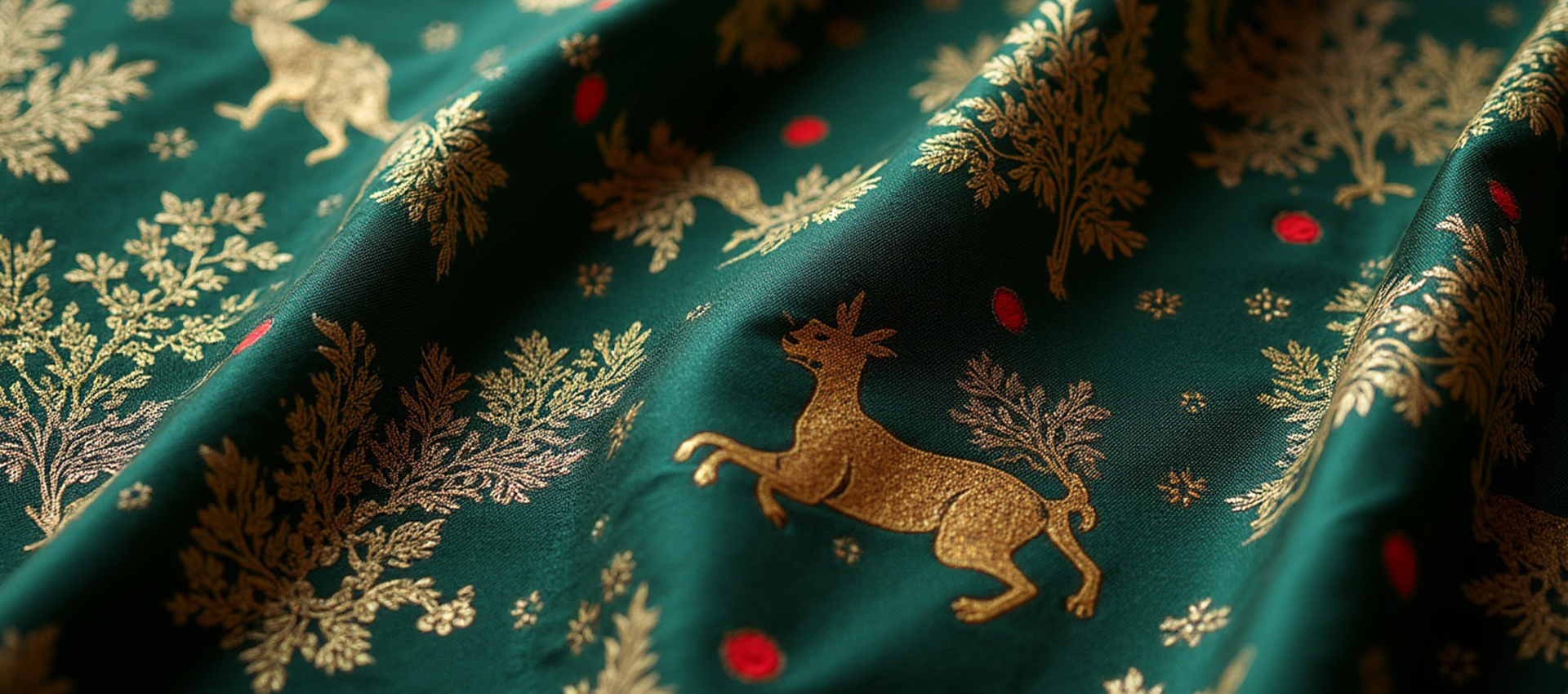
The floral jaals, delicate foliage, paisleys and elaborate motifs that we associate with Banarasi textiles did not emerge in isolation. Official textile documentation traces the development of Banaras brocade's elaborate design vocabulary to the Mughal period, when Persian influences blended with Indian aesthetics. Motifs such as kalga, bel, floral patterns, jal and meena became part of the visual language of Banarasi weaving. That cultural meeting is part of what makes Banarasi textiles so visually distinctive: they are not simply “traditional Indian designs”, but the result of centuries of artistic exchange.
This is one fact that completely changes the way you look at the price of a genuine handwoven Banarasi. The time required depends heavily on the complexity of the design and weaving technique. Government handloom documentation notes that an intricate six-yard Banarasi saree can take anywhere from around 15 days to six months to weave. Think about that the next time you see a heavily patterned Banarasi saree. What looks like a finished six-yard piece of fabric may actually represent weeks or months of coordinated work.
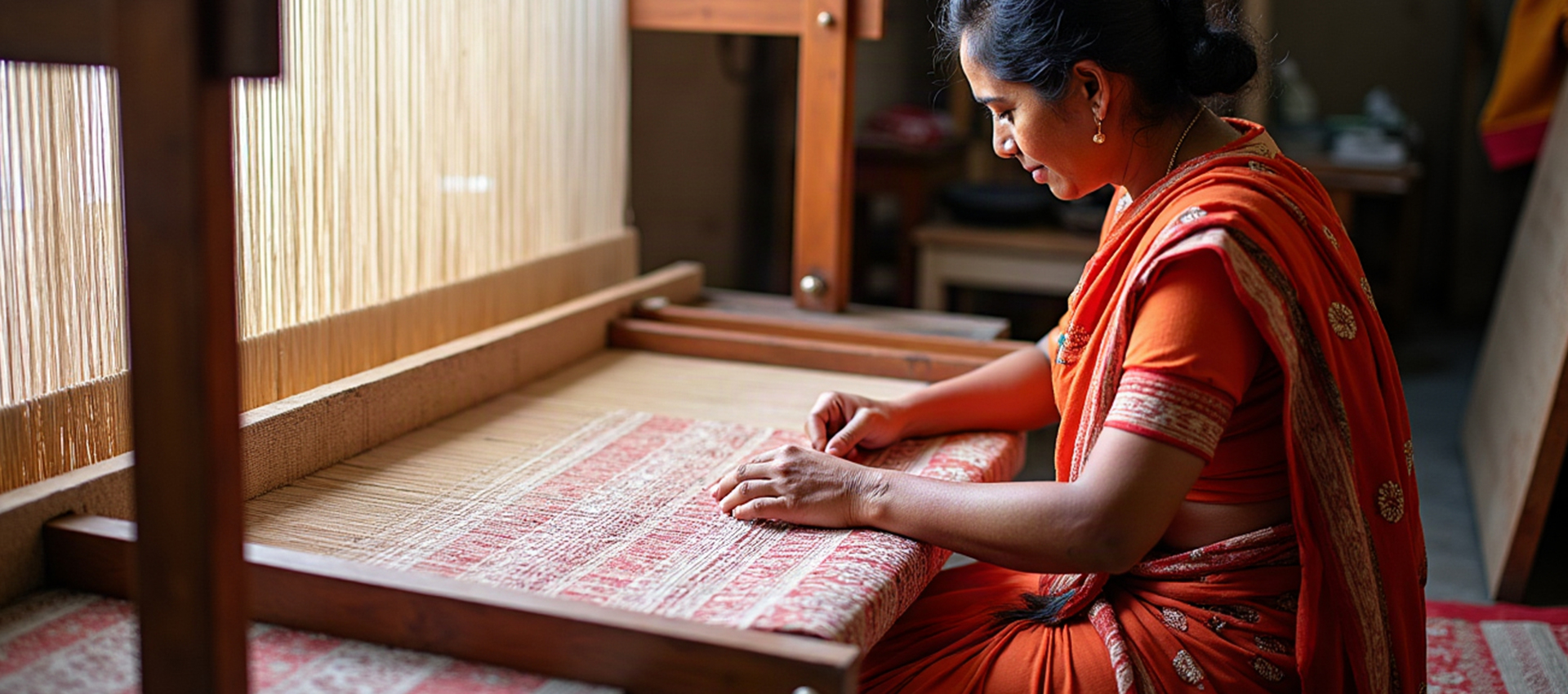
The making of a handwoven Banarasi saree traditionally extends beyond the person sitting at the loom. Preparing the warp and weft, getting the yarn ready for weaving and carrying out the various stages before and after weaving all require skill. Government documentation on Banaras handloom traditions notes that while men traditionally work on the looms, women play an important role in preparing warp and weft threads, with the wider family often involved in this cottage-industry ecosystem. So when we talk about “the weaver” behind a saree, the reality can be much broader: an entire household may contribute to bringing one textile to life.
If you love handloom, Kadhwa Banarasi is a name worth remembering. In Kadhwa weaving, decorative motifs are individually created with extra-weft threads rather than relying simply on long floats running across the fabric. This makes it possible to create incredibly detailed butis and elaborate patterns while keeping the reverse side comparatively clean. The technique demands patience, precision and considerable skill. It is also one reason why two sarees that look similar from a distance can differ significantly in craftsmanship and price. For a saree lover, turning the saree over and looking at the reverse is sometimes as fascinating as admiring the front.
We spend so much time admiring the pallu and border that we rarely turn the saree over. But the reverse side can reveal important clues about how a textile was woven. Different Banarasi techniques produce different structures on the back. Official India Handloom Brand documentation, for example, describes specific characteristics of Banaras brocade and Tanchoi, including the appearance or absence of weft floats and the relationship between the face and reverse of the fabric. This doesn't mean there is one universal “backside test” that can authenticate every Banarasi saree. Weaving techniques vary. But understanding the reverse can make you a much more informed buyer.
The glow of a Banarasi saree is often what catches the eye first, but zari is not simply a decorative gold-coloured thread. Traditional Banaras brocades are described by the India Handloom Brand as finely woven silk textiles decorated with zari, including gold and silver metallic effects. The use of metallic yarn contributes to the distinctive visual richness and, in some brocades, the weight of the fabric. This is why the zari on an old heirloom Banarasi can have a very different character from a modern imitation that merely tries to reproduce the appearance of gold.
Tanchoi is one of the more intriguing chapters in the Banarasi story. India Handloom Brand documentation records that Tanchoi silk was said to have entered India through Chinese traders in the 19th century and was subsequently adapted by Indian weavers. Its characteristic smooth surface, satin weave and intricate multicoloured motifs give it a personality quite different from a conventional heavy gold brocade. It is a beautiful example of how Indian handloom traditions have never existed in a vacuum. They have continually absorbed, adapted and transformed influences from elsewhere.
If the phrase “Banarasi saree” makes you imagine something heavy and elaborate, it is time to rethink that idea. Kora or Organza Banarasis can be light and crisp, while Georgette versions can offer a softer and more fluid drape. Butidar designs can also feel much more restrained than an all-over brocade. This variety is one of the reasons Banarasi sarees remain relevant to modern wardrobes. You can choose the richness of the weaving tradition without necessarily choosing the heaviest possible saree.
One of the joys of studying Banarasi sarees is learning the names behind the patterns. Buti refers to small individual motifs, while bel describes vine-like patterns. Jal or jaal creates a net-like arrangement across the fabric. Kalga is associated with stylised floral and foliate forms, while meena introduces coloured elements into the design. Once you learn these words, shopping for Banarasi sarees becomes a little like learning to read a textile. Instead of simply seeing “flowers and gold”, you begin to notice how the motifs have been arranged and how the artisan has constructed the design.
Perhaps the most important fact of all is that you cannot judge a Banarasi saree simply by how expensive, shiny or ornate it looks. Handloom authenticity is connected to how the textile is actually made. The Government of India's India Handloom Brand was created to identify high-quality authentic handloom products and provide consumers with greater confidence around raw materials, processing, embellishments and weaving. That is why learning about weaving techniques matters. A saree becomes much more meaningful when you understand what went into creating it.
Perhaps that is the real magic of Banarasi. From a distance, you see colour and shine. Look closer and you see motifs. Look closer still and you see individual threads, techniques and decisions made by the artisan. Then you learn the history behind those motifs, the time required to weave them and the generations of knowledge that made the process possible. Suddenly, the saree is no longer simply something beautiful to wear. It becomes a piece of living textile history. And perhaps that is why a good Banarasi never really goes out of fashion. Trends may change, blouse styles may change and the occasions on which we wear silk may evolve, but craftsmanship has a way of remaining relevant.
At Antarang, we believe a saree becomes even more beautiful when you know the story woven into it. Explore our thoughtfully curated collection of Indian handlooms and handcrafted sarees, chosen for women who appreciate not just how a saree looks, but what it represents.
Real vs Fake Banarasi Saree: 9 Ways to Spot Authentic Handloom Weaving
September 17th, 2026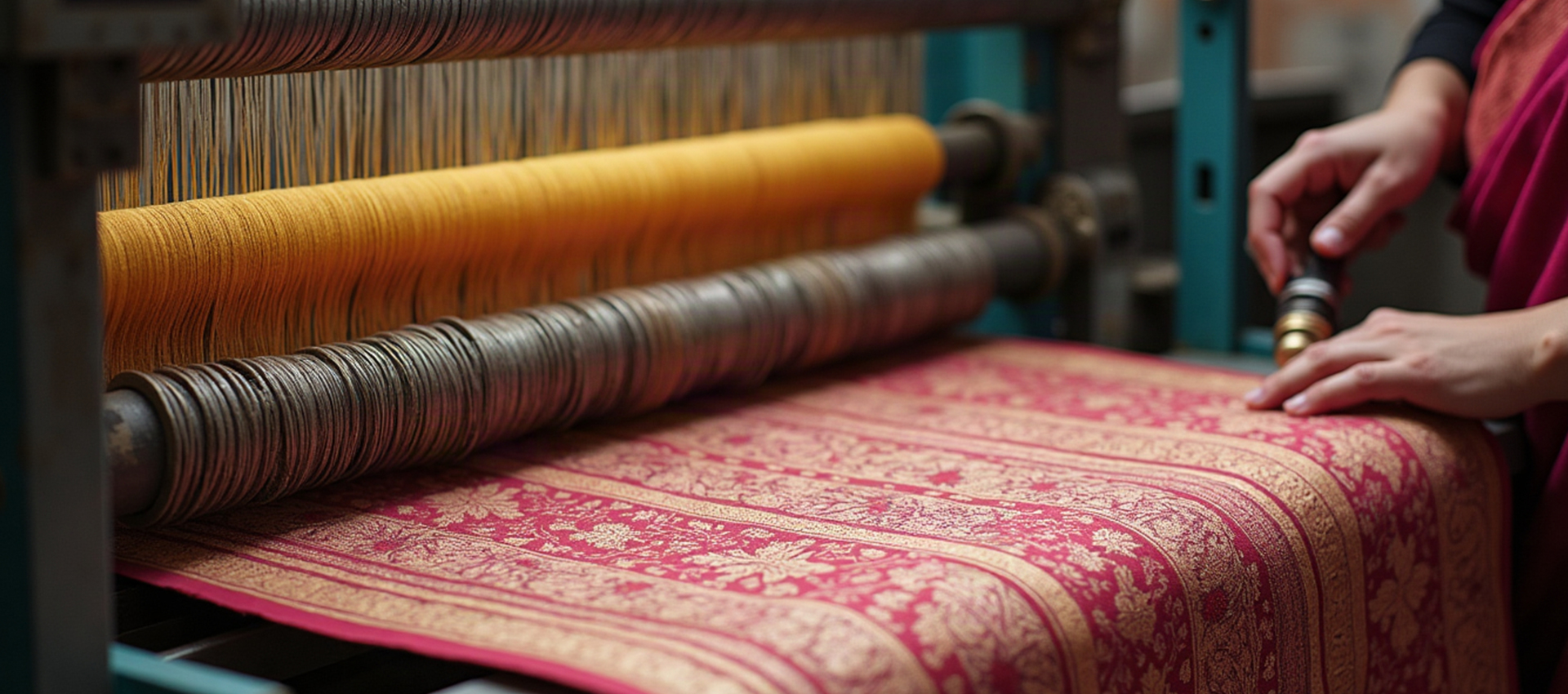
Jacquard Weaving Explained: Why Jacquard Does NOT Mean Powerloom
September 10th, 2026
The Origin of Linen Sarees in India: From Ancient Flax to Handloom
September 2nd, 2026