Linen sarees have become one of the most loved choices for women who want their wardrobe to feel light, elegant and effortless. With their natural texture, breathable character and understated beauty, linen sarees seem perfectly suited to the Indian climate and the modern Indian woman's lifestyle. But the story of linen in India is much older and more fascinating than the contemporary linen saree might suggest. The history of linen in the Indian subcontinent stretches back thousands of years.
Ancient Indian texts contain references to fabrics believed to have been made from flax, the plant from which linen fibre is obtained. Yet there is an important distinction to make: the linen saree as we know it today is a relatively modern evolution of a much older textile tradition. Linen has an ancient history in India, while the modern handwoven linen saree emerged as Indian weavers and textile designers began adapting linen yarn to the traditional sari form. Understanding that journey makes today's linen saree even more interesting. It is not simply an imported fabric turned into a saree. It represents the meeting of an ancient natural fibre with India's extraordinarily diverse weaving traditions.
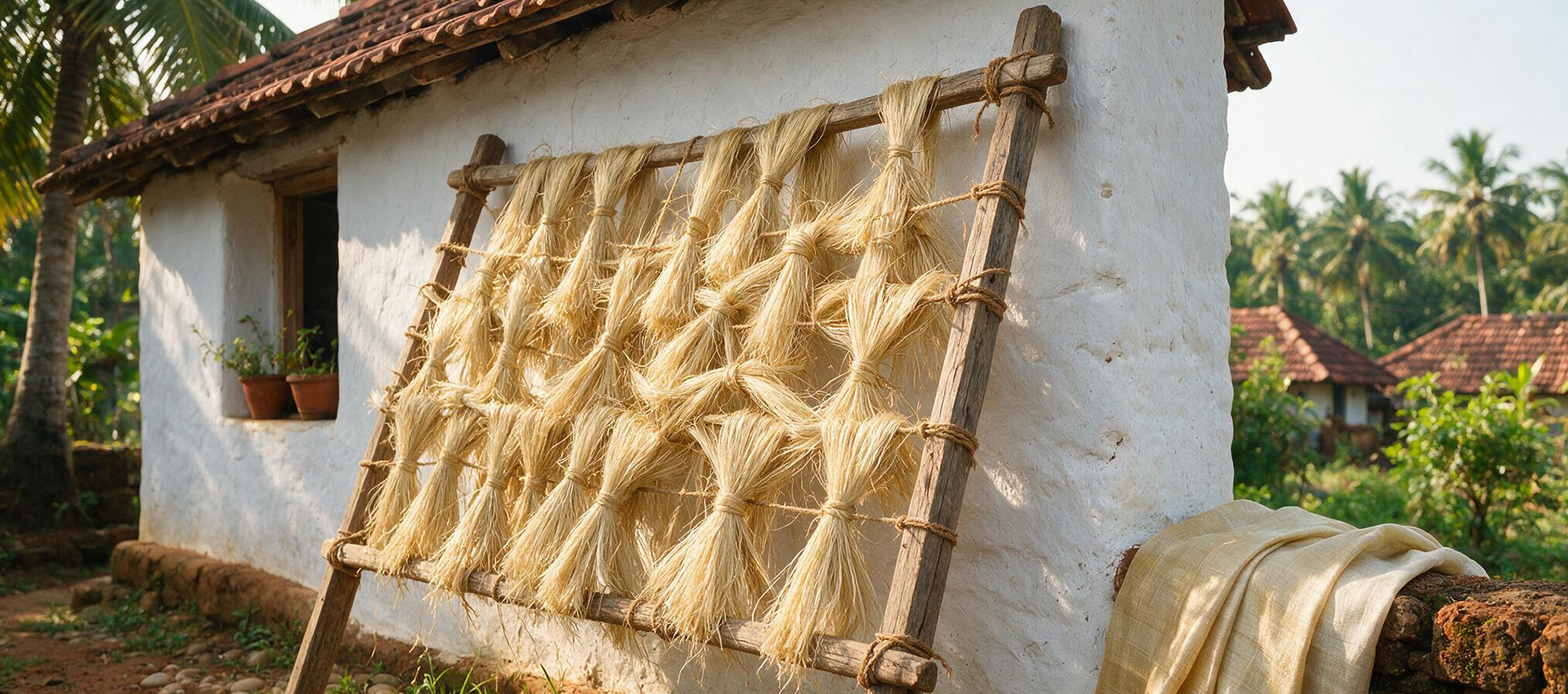
Linen is a natural textile fibre obtained from the stalk of the flax plant. Unlike cotton, which comes from the fluffy fibres surrounding the cotton seed, flax produces long bast fibres that require several stages of processing before they can be spun into yarn. The process involves harvesting the plant, separating the useful fibres from the stalk and preparing them for spinning and weaving. Linen production is labour-intensive, which is one reason quality linen has traditionally been regarded as a valuable textile.
NITI Aayog describes linen as a lightweight, absorbent textile made from flax fibres and notes its suitability for warm conditions. Linen is also one of the world's oldest known textile fibres. Ancient civilisations, particularly in Egypt and the Mediterranean region, developed sophisticated linen traditions thousands of years ago. But the story of flax does not belong exclusively to Europe or Egypt. Research into the history of linen in the Indian subcontinent has found extensive references to flax, linen and related textile terms in ancient Indian literature.
The origins of linen in India take us far beyond the modern fashion industry. Historical research has identified references to linen-like textiles in Vedic, Buddhist and Jain literature, with terms such as ksauma and dukula associated by some scholars with linen or flax-based textiles. The precise identification of ancient textile terminology is complex, and historians continue to debate the meaning of certain terms, but the evidence points towards the cultivation and use of flax and linen-like fibres in ancient India. Ancient Indian literature describes linen as a fine and valuable textile used for clothing and ceremonial purposes. Research has also documented references to flax cultivation, spinning and weaving, particularly during the Mauryan period. The Arthashastra contains information concerning textile production and the economic importance of flax, suggesting that linen was not simply a rare curiosity but part of a wider textile economy. This history is significant because India is often thought of primarily through the history of cotton and silk. Cotton became deeply embedded in India's textile culture, while silk developed its own extraordinary regional traditions. Linen, however, was also part of this larger story, even if it did not become the dominant fibre for Indian clothing.
So, when did linen become a saree? There isn't one specific date or one place that can be identified as the definitive birthplace of the modern linen saree in India. Unlike established regional handlooms such as Banarasi, Chanderi or Maheshwari, linen sarees do not have a single centuries-old weaving tradition tied exclusively to one Indian town. Instead, the contemporary linen saree developed through the adaptation of linen yarn to India's existing weaving and sari traditions. Indian handloom communities have always experimented with fibres, yarns, textures and weaving structures, and linen offered an interesting alternative to traditional cotton and silk. The sari itself is remarkably adaptable.
Across India, weavers have transformed the same basic garment into hundreds of regional textile traditions by changing the fibre, weave, motifs, colours and finishing techniques. National Geographic notes that Indian saris have historically been created from fibres including silk, cotton and linen, while India's handloom tradition continues to encompass extraordinary regional diversity. This adaptability created the perfect environment for linen to find a new expression as a saree.
There is a practical reason linen has found such a natural place in contemporary Indian wardrobes. Linen is breathable, absorbent and lightweight, making it particularly comfortable in warm weather. The fibre's natural texture also gives the saree a distinctive visual character that is different from the smoothness of silk or the softness of fine cotton.
A linen saree does not usually depend on heavy ornamentation to look beautiful. Its appeal comes from the texture of the weave, the fall of the fabric and its slightly relaxed appearance. This has made linen particularly attractive to women looking for sarees that can move easily between work, travel, everyday dressing and understated festive occasions. The fabric also develops a beautiful personality with use. Its natural texture can soften over time, giving an already elegant saree an increasingly lived-in quality. For today's saree wearer, this combination of comfort and sophistication is perhaps the biggest reason linen has become so popular.
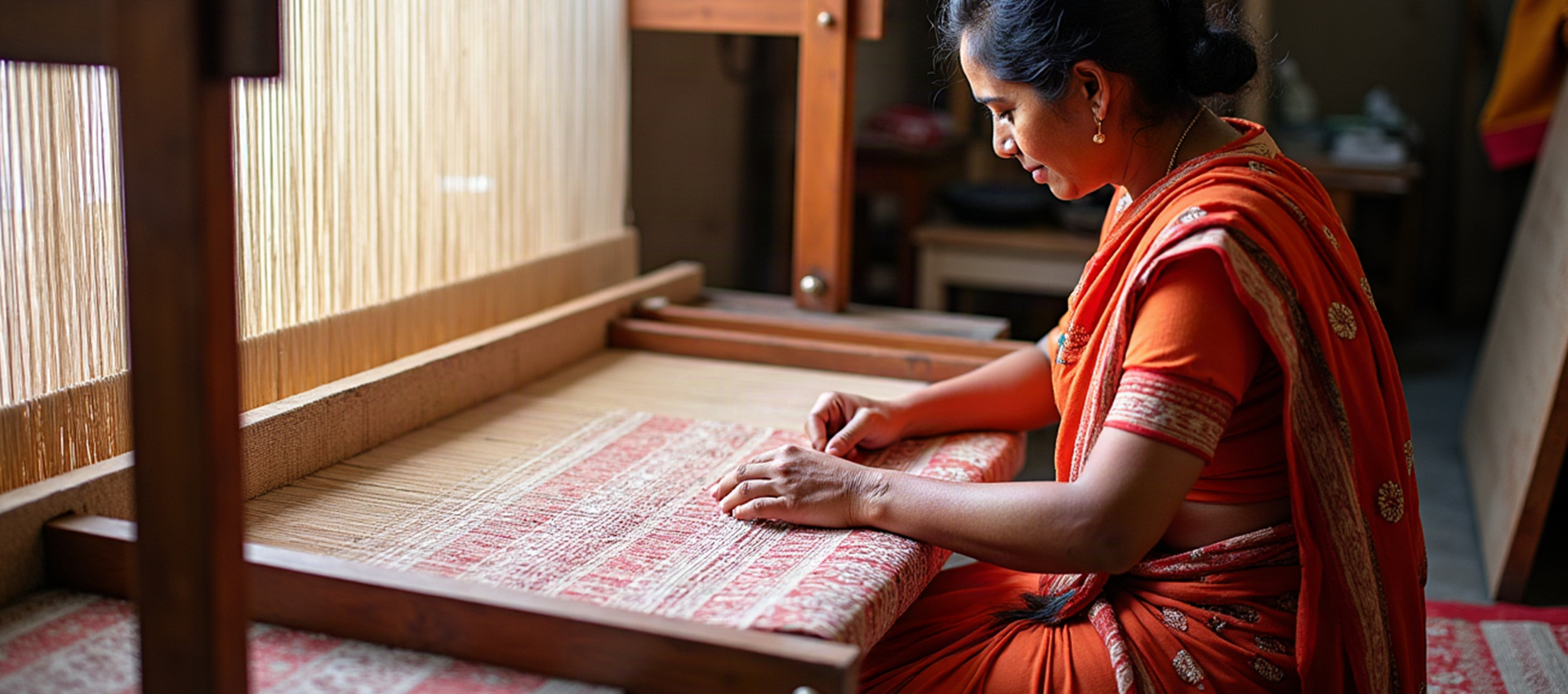
The modern Indian handwoven linen saree represents another important chapter in the story. India's handloom sector has a long tradition of adapting to new fibres while retaining the skill and character of the loom. Linen requires particular attention during weaving because flax fibres are comparatively less elastic than many other textile fibres and can be challenging to handle. Vogue India, while documenting the process of handwoven linen saris, highlights the skill involved in working with linen yarn and the difficulties created by its lack of elasticity. This is where the value of a handwoven linen saree becomes much clearer.
The beauty is not simply in the fibre itself. It lies in how the weaver handles that fibre. The choice of yarn, the density of the weave, the tension maintained on the loom, the finishing and the way borders or motifs are introduced can all change the personality of a linen saree. Two sarees made from linen can therefore look and feel completely different depending on how they are woven. This is one of the reasons handloom linen has developed such a distinctive following among people who appreciate textiles beyond surface appearance.
The popularity of linen sarees also reflects a larger change in the way Indian women dress. For generations, sarees were often associated with occasionwear, elaborate fabrics and traditional dressing. Today, women are increasingly looking for sarees that fit into real life. The modern woman may need one saree that can work for a meeting, another for a lunch, another for travel and another for a family gathering.
Heavy fabrics do not always fit that lifestyle. Linen offers an appealing alternative because it combines the visual sophistication of a saree with a comparatively relaxed and breathable feel. This is also why linen has become closely associated with minimal, conscious and contemporary Indian fashion. It works beautifully with simple blouses, silver jewellery, handcrafted accessories and even more modern styling. The result is a saree that feels rooted in Indian dressing without looking restricted by tradition.
This is a question worth answering because the history is often oversimplified. Linen as a fibre has been used by many ancient civilisations around the world, and its history cannot be claimed exclusively by India. At the same time, flax and linen have a documented history in the Indian subcontinent going back thousands of years. Research has recorded evidence of flax cultivation, linen production and the use of linen-related textiles in ancient Indian society. What is distinctly Indian is the way the fibre has been incorporated into the country's textile culture.
The sari provides a unique canvas for regional weaving traditions, and contemporary Indian weavers have interpreted linen through Indian techniques, colours, borders and styling. That makes the modern Indian linen saree a fascinating textile in its own right: ancient fibre, Indian weaving knowledge and contemporary design coming together in one garment.
The renewed interest in linen is part of a broader appreciation for natural fibres and handloom textiles. India's official India Handloom initiative specifically promotes authentic handloom products based on quality, raw material, processing and weaving, while seeking to create stronger markets and earnings for weavers. Linen is included among the textile products recognised within the India Handloom ecosystem.
For consumers, this shift represents an opportunity to look beyond trends and understand what they are buying. A handwoven linen saree carries the story of the fibre, the yarn and the person who transformed it on the loom. It also represents a different idea of luxury. Instead of being defined by weight, embellishment or obvious opulence, luxury can be found in the quality of the fibre, the skill of the weaving and the simplicity of the finished textile.
The story of linen sarees in India is still being written. What began as an ancient relationship between the Indian subcontinent and flax has evolved into a contemporary textile movement that brings together traditional weaving, natural fibres and modern Indian dressing. The popularity of linen today proves that heritage does not always have to look traditional. Sometimes, the best way to keep textile history alive is to allow it to evolve.
A linen saree can therefore be both old and new. Its fibre carries an ancient history, its weaving may come from a contemporary Indian loom, and the woman wearing it may style it in a way that would have been impossible for previous generations to imagine. That is the beauty of Indian textiles. They survive not by standing still, but by changing with the people who wear them.
The origin of linen sarees in India is not a single moment in history. It is a long journey—from the ancient use of flax and linen in the Indian subcontinent to the modern adaptation of linen into the six-yard saree. Today, the handwoven linen saree represents everything that makes Indian textiles so fascinating: natural materials, skilled craftsmanship, regional weaving knowledge, adaptability and an ability to remain relevant across generations.
At Antarang, we believe that understanding the story behind a textile makes wearing it even more meaningful. Our collection of sarees celebrates Indian craftsmanship and thoughtfully curated textiles that are made to fit into the lives of modern women.
Explore Antarang's handwoven sarees and discover the beauty of India's living textile traditions at www.myantarang.com. Because the most beautiful sarees are not simply worn. They carry stories—and linen has a very long one.
The Complete Guide to Banarasi Sarees: 10 Types Every Saree Lover Should Know
September 28th, 2026
11 Fascinating Facts About Banarasi Sarees You Probably Never Knew
September 24th, 2026
Real vs Fake Banarasi Saree: 9 Ways to Spot Authentic Handloom Weaving
September 17th, 2026
Jacquard Weaving Explained: Why Jacquard Does NOT Mean Powerloom
September 10th, 2026