When most people hear the words Banarasi saree, they imagine a rich silk saree shimmering with gold zari, intricate floral motifs and a grand wedding pallu. And while that image is certainly part of the Banarasi story, it represents only one small chapter of a much larger weaving tradition. The world of Banarasi sarees is remarkably diverse. There are sarees that are opulent and heavily brocaded, others that are light and almost ethereal, some covered with tiny butis, while others feature elaborate jangla patterns running across the entire body. There are delicate organza Banarasis, elegant Katan silk sarees, richly textured Tanchois and contemporary interpretations that make the traditional weave surprisingly easy to wear today.
Banaras Brocades and Sarees are a GI-registered craft, recognised for their fine silk, intricate brocade, zari work and distinctive motifs. Traditional Banarasi weaving also includes design elements such as kalga, bel, jaal, jali and meena, making the vocabulary of the craft as fascinating as the sarees themselves. So, if you have ever wondered what are the different types of Banarasi sarees, here is a guide to understanding the most important varieties and what makes each one special.
Katan is one of the most recognised silk bases associated with Banarasi weaving. Traditionally made using twisted mulberry silk yarn, Katan creates a smooth, refined fabric that allows the brilliance of zari and woven motifs to stand out beautifully. A Katan Banarasi can be heavily brocaded for weddings or kept relatively understated for a more elegant, versatile look. Its graceful fall and rich silk surface make it a natural choice for bridal wardrobes, festive occasions and heirloom sarees. What makes Katan particularly appealing is its ability to look luxurious without necessarily depending on excessive ornamentation. A beautifully woven Katan saree with a restrained border and delicate motifs can be just as striking as a heavily embellished one.
Kadhwa Banarasi sarees are known for their exceptionally detailed and labour-intensive weaving technique. In Kadhwa weaving, decorative motifs are created individually with extra-weft threads rather than being formed through long floating threads across the back of the fabric. This allows artisans to produce intricate butis, floral jaals and elaborate motifs with remarkable precision. The reverse side of a genuine handwoven Kadhwa saree is often relatively clean, without the long loose floats commonly associated with some other brocade techniques. Because each motif is woven separately, creating a Kadhwa Banarasi can take considerably more time and skill than producing a simpler brocade. The result is a refined saree with depth, clarity and an unmistakable sense of craftsmanship.
Kadhwa Banarasis may feature silk, zari and meenakari work, making them suitable for both grand bridal wardrobes and collectors who appreciate the finer details of handloom weaving. Their time-intensive production also means that authentic Kadhwa sarees are often positioned among the more premium varieties of Banarasi silk.
This is perhaps the image most closely associated with the classic Banarasi saree. Banaras brocade sarees are finely woven silk textiles decorated with intricate designs using zari. Traditional motifs often include floral and foliate patterns, kalga, bel, jal and meena work. The combination of silk, zari and compact weaving gives these sarees their unmistakable richness. A traditional Banarasi brocade is ideal when you want your saree to feel ceremonial. Think weddings, receptions, milestone celebrations and occasions where the saree itself is meant to make an entrance.
The word butidar comes from buti, referring to small motifs scattered across the body of the saree. Unlike a heavily patterned saree where the entire surface can feel ornate, a Butidar Banarasi creates beauty through repetition and space. Tiny floral, paisley or geometric motifs are woven across the silk, often complemented by a more elaborate border and pallu. This makes the Butidar an excellent choice for women who love the richness of Banarasi silk but prefer something slightly quieter and more versatile.
Jangla is for the woman who loves an elaborate saree. Instead of isolated motifs, the Jangla style is characterised by flowing patterns that spread across the body, often creating an almost garden-like effect. Vines, flowers and foliage appear to move across the fabric, giving the saree a sense of continuity. A Jangla Banarasi is particularly beautiful when you want the textile itself to be the centre of attention. Because the pattern can be quite elaborate, styling the rest of the look with restraint often allows the weaving to shine.
Tanchoi is one of the more distinctive varieties within the Banarasi weaving tradition. It is known for its smooth satin-like surface and intricate multicoloured designs. The weaving uses silk in both warp and weft, with coloured weft threads creating detailed motifs. Traditional Tanchoi designs may feature flowers, birds, peacocks and parrots, and the fabric has a characteristically smooth feel. The India Handloom Brand notes that genuine Tanchoi weaving has a high warp density and a relatively flat reverse side, where the design appears almost like a shadow of the face. Tanchoi is a wonderful choice if you want a Banarasi saree that feels sophisticated rather than overtly bridal.
Cutwork Banarasi sarees are known for their distinctive patterned appearance and the way extra threads are worked and finished to create the design. They can offer the richness associated with Banarasi weaving while sometimes feeling lighter and more contemporary than heavily brocaded varieties. The India Handloom Brand specifically recognises Banarasi Cutwork as an identified handloom product category. For someone building a versatile saree wardrobe, a well-chosen Cutwork Banarasi can bridge the gap between traditional occasion wear and something you might actually reach for more often.
Kora Banarasi sarees are loved for their crisp, lightweight and slightly translucent character. Organza-based Banarasis can carry the unmistakable richness of zari and woven motifs while feeling much lighter on the body than a dense silk brocade. They are particularly beautiful for festive gatherings, intimate weddings, daytime celebrations and occasions where you want the grandeur of Banarasi without the weight. The contrast is what makes them interesting: a delicate-looking fabric carrying the visual richness of traditional Banarasi weaving.
Banarasi weaving has also been adapted to lighter fabrics such as georgette, creating sarees with a softer fall and an easier, more fluid drape. A Banarasi georgette can be an excellent option for women who love traditional zari work but do not necessarily want a structured silk saree. It works beautifully for evening events, festive dinners and contemporary occasion dressing. It is also worth remembering that the word “Banarasi” describes a broader weaving tradition rather than one single fabric weight or appearance. The India Handloom Brand's recognised product categories include Banarasi Georgette Cutwork alongside several other Banarasi varieties.
Meenakari Banarasis bring colour into the traditional zari vocabulary. Alongside metallic zari, contrasting coloured threads are woven into motifs, adding depth and visual interest to the design. The result can be particularly striking when jewel tones are combined with gold zari. Meenakari Banarasis are wonderful for festive wardrobes because they offer the richness of traditional Banarasi weaving while giving you considerably more colour to work with.
There is no single “best” Banarasi saree. The right one depends on your wardrobe, occasion and personal relationship with silk. If you are looking for a classic wedding or bridal saree, a richly woven Katan, Kadhwa or Banarasi Brocade can be an investment-worthy choice. If you want something more versatile, a Butidar or lighter Cutwork saree may serve you beautifully. For women who prefer intricate craftsmanship without a heavy drape, Tanchoi, Organza or Georgette Banarasis can be particularly appealing.
And if you are drawn towards unusual textiles and detailed weaving, Jangla, Meenakari and Jamdani-inspired Banarasis offer an opportunity to look beyond the conventional red-and-gold wedding saree. One important thing to remember when shopping for a Banarasi saree is that the word Banarasi alone should not be treated as a guarantee of handloom authenticity. Look carefully at the weave, fabric, zari, motifs and seller's information. India Handloom Brand products, where applicable, carry identification details that can be checked through the official authenticity system.
Perhaps the most beautiful thing about Banarasi sarees is that they have never really belonged to only one occasion. A Banarasi can be a bride's most treasured saree, a mother's wedding anniversary drape, a daughter's first silk saree, or simply something you wear on an ordinary evening because you feel like dressing beautifully. The variety within Banarasi weaving gives today's woman the freedom to choose her own version of the tradition. Heavy or light. Grand or understated. Gold-rich or colour-filled. Classic or contemporary. Because ultimately, the beauty of a Banarasi saree isn't just in how much zari it carries. It is in the skill, patience and imagination woven into every inch of it.
Looking for handwoven sarees with a story behind them? Explore Antarang's thoughtfully curated collection of Indian handlooms and handcrafted textiles—chosen not simply as clothes to wear, but as pieces of India's living textile heritage to bring into your own journey.
11 Fascinating Facts About Banarasi Sarees You Probably Never Knew
September 24th, 2026
Real vs Fake Banarasi Saree: 9 Ways to Spot Authentic Handloom Weaving
September 17th, 2026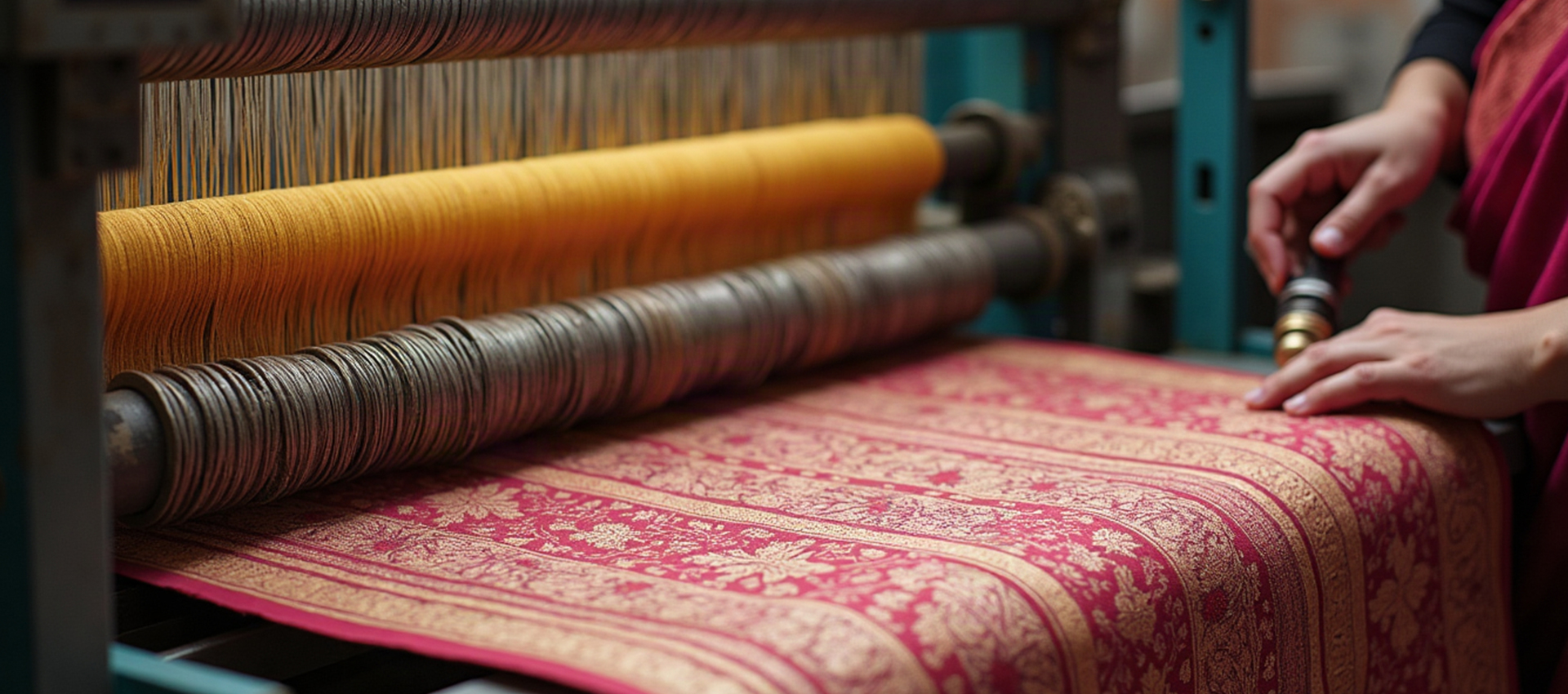
Jacquard Weaving Explained: Why Jacquard Does NOT Mean Powerloom
September 10th, 2026
The Origin of Linen Sarees in India: From Ancient Flax to Handloom
September 2nd, 2026