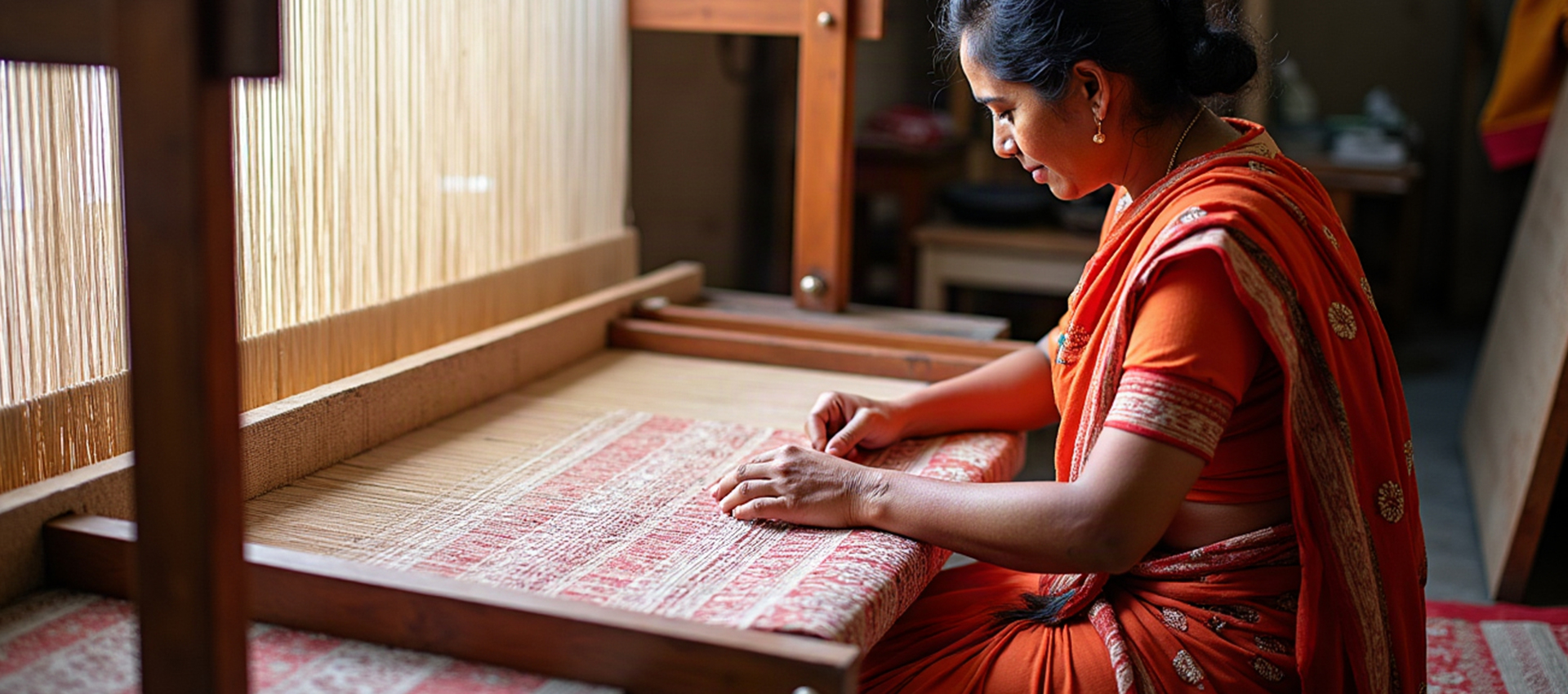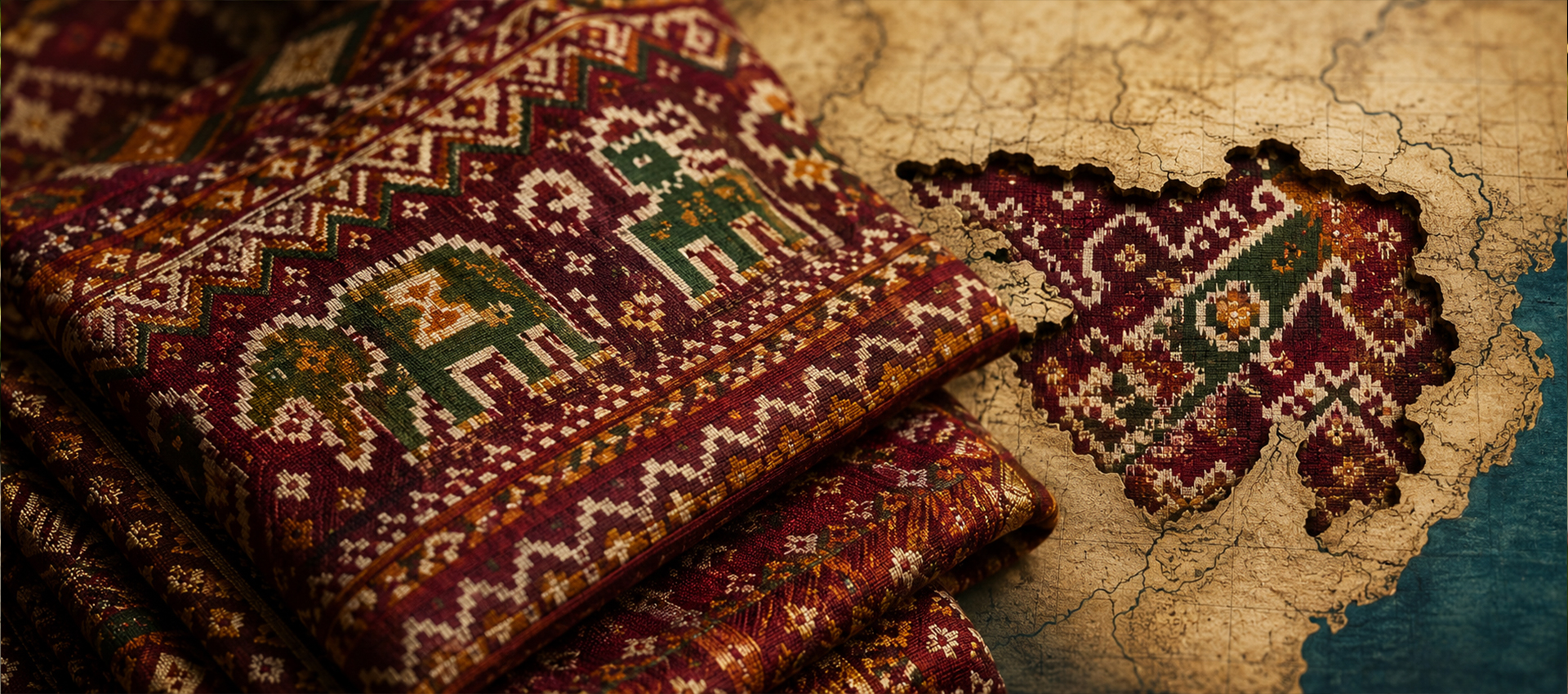
There are sarees you wear for an occasion, and then there are sarees you inherit, protect, and eventually pass down like jewellery. The Patan Patola saree belongs firmly to the second category. If you have ever scrolled through a "handloom sarees of India" list or searched for "double ikat saree meaning," you have likely stumbled upon this legendary Gujarati weave — and once you understand what actually goes into making one, you will never look at a saree the same way again.
The story of Patan Patola begins not in a marketplace, but in a king's court. Legend has it that in the 12th century, King Kumarpal of the Solanki dynasty of Gujarat became so enamoured with the patola weave that he invited 700 families of patola weavers from Jalna in South Maharashtra to settle in Patan, in North Gujarat. The king reportedly believed the fabric warded off evil and ill health, and since a single handwoven patola took months to complete, he arranged for enough weaver families to be present so he could wear a fresh patola every single day for his temple visits. That single royal whim is credited with turning Patan into one of the greatest textile hubs in Indian history, flourishing between the 11th and 13th centuries.
Interestingly, the word "Patola" itself is believed to descend from the Sanskrit term "pattakulla," referring to a silk fabric, and while the craft is now inseparable from Gujarat, some of the earliest literary references to patola actually appear in South Indian texts describing women wearing the fabric for sacred ceremonies. The weaving technique itself is thought to be even older than the Solanki patronage — motifs echoing the tie-dye resist method can be seen in the ancient cave paintings of Ajanta, hinting at a tradition stretching back well over a thousand years.
If you've worn ikat sarees before, you already have a sense of the visual language — geometric patterns, a slightly blurred, painterly edge to the motifs, and jewel-toned colours. But Patan Patola takes ikat to its most extreme, most demanding form: double ikat. In single ikat, only the warp (vertical threads) or the weft (horizontal threads) are tie-dyed before weaving.
In double ikat, both the warp and the weft threads are individually measured, tied, and resist-dyed in the exact pattern before they even touch the loom. The weaver must then interlace these pre-dyed threads with such mathematical precision that the design on the warp aligns perfectly with the design on the weft, thread by thread, to form the final motif. A single miscalculation and the pattern is ruined.
This is why patola is often called "the mother of all ikat techniques." Double ikat is only woven in two countries in the world — India and Indonesia — and within India, the finest and most complex version is the Patan patola of Gujarat, made exclusively by the Salvi community. The result is a fabric with no "wrong side" — both faces of the saree display the pattern with equal clarity and colour intensity, a hallmark that instantly separates a genuine Patan Patola from a printed or single-ikat imitation.
There's a beautiful old Gujarati saying that sums up the craft's legendary durability: loosely translated, it says that a patola may eventually tear from age, but its colours and pattern will never fade. That's not poetic exaggeration — because the colour is locked into the very structure of the dyed thread rather than sitting on the surface of woven cloth, the design genuinely survives the life of the fabric.
No conversation about Patan Patola is complete without mentioning the Salvi family, the sole custodians of this weaving tradition for generations. Knowledge of double ikat production was historically held exclusively within Salvi family lineages, passed from father to son and from mother to daughter-in-law, with no provision for teaching outsiders. This wasn't gatekeeping for its own sake — mastering double ikat weaving is so technically punishing that it genuinely requires a lifetime of practice, often beginning in early childhood, to execute with any consistency.
Today, authentic double ikat Patola production in Patan survives with fewer than five families, all belonging to the Salvi lineage. The family has also opened the Patan Patola Heritage Museum in their hometown, where visitors can watch live demonstrations of the loom work and compare their craft against single-ikat textiles from around the world.
One particularly moving detail: younger members of the Salvi family have chosen to leave other professions — including architecture and medicine — specifically to keep the weaving tradition alive, aware that without a new generation stepping in, this 900-year-old art form could vanish entirely within a few decades.
Here's a fact that stops most people mid-scroll: a single, genuine handwoven Patan Patola saree can take anywhere from six months to a full year to complete — and that's often with multiple family members working on it together.
The process starts with the design being carefully plotted out on graph paper, almost like a mathematical blueprint. Every thread of the warp and weft is then individually tied and dyed using entirely natural dyes — indigo, turmeric, madder root, pomegranate skin, and marigold flower are still used by the family that maintains the purest form of the tradition, a rarity in an industry now dominated by synthetic colour. Some workshops also use natural dyes like cochineal, sourced internationally at significant cost, alongside indigo, pomegranate, and madder, while the raw silk itself is typically imported and prepared before the dyeing begins.
Once the threads are dyed and dried, the true test begins: weaving them together so the pre-planned patterns on the warp and weft align pixel-perfectly to reveal the final motif. Traditional Patan Patola motifs are rich with symbolism and geometry — parrots (popat), elephants (hathi), dancing figures (nari), flowers, and the densely packed grid pattern known as ratan chowk are among the most iconic. Because of the labour, skill, and time invested, it's easy to understand why these sarees are priced like heirlooms rather than garments — genuine pieces can run into several lakhs of rupees, and rightly so.
Patan Patola wasn't just a domestic luxury — it was also a major export commodity for centuries. From as early as the first century CE and continuing into modern times, patola sarees were significant export products to Malaysia and Indonesia, where they were treasured for their believed protective qualities and used in ceremonial contexts. Even before World War II, Indonesia remained one of the major international buyers of patola textiles, a trading relationship that highlights just how far this Gujarati craft travelled long before "handloom tourism" was even a concept.
Closer to home, patola held immense ceremonial value among Indian royalty, the Brahmin elite, and Jain and Bohra merchant communities, often gifted at weddings and worn during auspicious rituals — a tradition that continues among many Gujarati and Jain families even today.
By the mid-20th century, as talented weaving families moved into other professions and demand shifted toward mass-produced textiles, the number of families capable of true double ikat weaving dwindled dramatically. To protect the craft's authenticity and prevent cheaper single-ikat or printed imitations from being passed off as "Patola," the Geographical Indications Registry granted Patan Patola formal legal protection in 2013. This GI tag matters enormously for buyers — it legally distinguishes genuine, Patan-woven double ikat sarees from lookalikes made elsewhere using faster, cheaper single-ikat methods, such as the lighter version woven in Rajkot.
This recognition, paired with growing interest in slow fashion and authentic Indian handloom, has fuelled a genuine revival. Where the craft once teetered on the edge of extinction, it is now spoken of in the same breath as Banarasi silk and Kanjeevaram as one of India's most collectible saree traditions.
For today's saree enthusiast, Patan Patola checks every box that modern handloom appreciation is built on: heritage, rarity, sustainability, and unmistakable identity. In a wardrobe full of factory-printed "ikat-style" sarees, a genuine Patan Patola stands apart instantly — the reversible design, the jewel-bright natural dye tones, and the geometric motifs are simply impossible to replicate through printing.
There's also an emotional dimension driving the renewed demand. Handloom lovers today aren't just buying a saree; they're buying into a story — a 900-year-old lineage, a family that has refused to let a near-impossible art form die, and a piece of cloth that will genuinely outlive its owner in both structure and colour. For collectors and heirloom-conscious buyers, a Patan Patola isn't a seasonal purchase; it's an investment piece meant to be worn on milestone occasions and eventually handed down.
From a styling perspective, the saree's structured pallu and dense, symmetrical motifs make it a striking choice for weddings, festive pujas, and formal cultural events. Because the pattern lives identically on both sides of the fabric, draping styles that reveal the reverse pleats — a look many modern saree-wearers love experimenting with — actually enhance rather than compromise the design, something almost no other saree can offer.
If you're considering adding one to your collection, keep a few things in mind. Check whether the design and colour intensity are truly identical on both sides of the fabric — this is the single most reliable sign of authentic double ikat. Look for the characteristic soft blur at the motif edges, a natural by-product of the tie-dye-then-weave process, which is very different from the crisp, clean edges of a printed imitation. Ask about natural dyes, since many of the most authentic pieces still use indigo, madder, and pomegranate-based colours. And wherever possible, look for the GI tag or purchase from sellers who can verify the saree's Patan, Gujarat origin and Salvi-lineage weaving credentials.
What makes Patan Patola so compelling isn't just the difficulty of the weave — it's the sheer improbability that it has survived at all. A craft nearly lost to time, kept alive by a handful of families who chose devotion over convenience, now finding its way back into wardrobes of women who understand that a saree can be so much more than fabric. When you drape a Patan Patola, you're not just wearing a garment; you're wearing eight centuries of Gujarati craftsmanship, royal history, and one family's quiet, extraordinary refusal to let a masterpiece disappear.
If you've been searching for a handloom saree that combines rarity, heritage, and timeless design, Patan Patola deserves a place at the very top of your wishlist — not just as a beautiful saree, but as a piece of living Indian history you can wear.
11 Fascinating Facts About Banarasi Sarees You Probably Never Knew
September 24th, 2026
Real vs Fake Banarasi Saree: 9 Ways to Spot Authentic Handloom Weaving
September 17th, 2026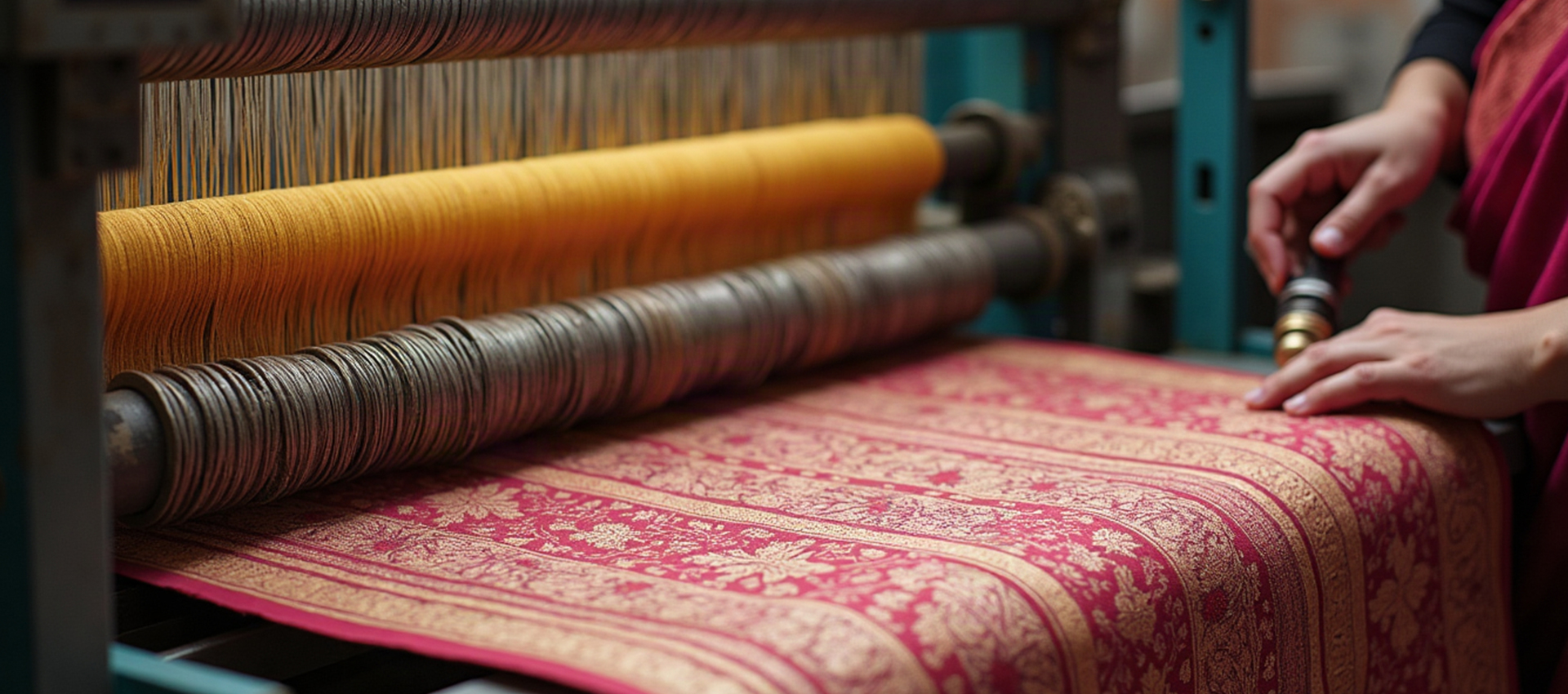
Jacquard Weaving Explained: Why Jacquard Does NOT Mean Powerloom
September 10th, 2026
The Origin of Linen Sarees in India: From Ancient Flax to Handloom
September 2nd, 2026