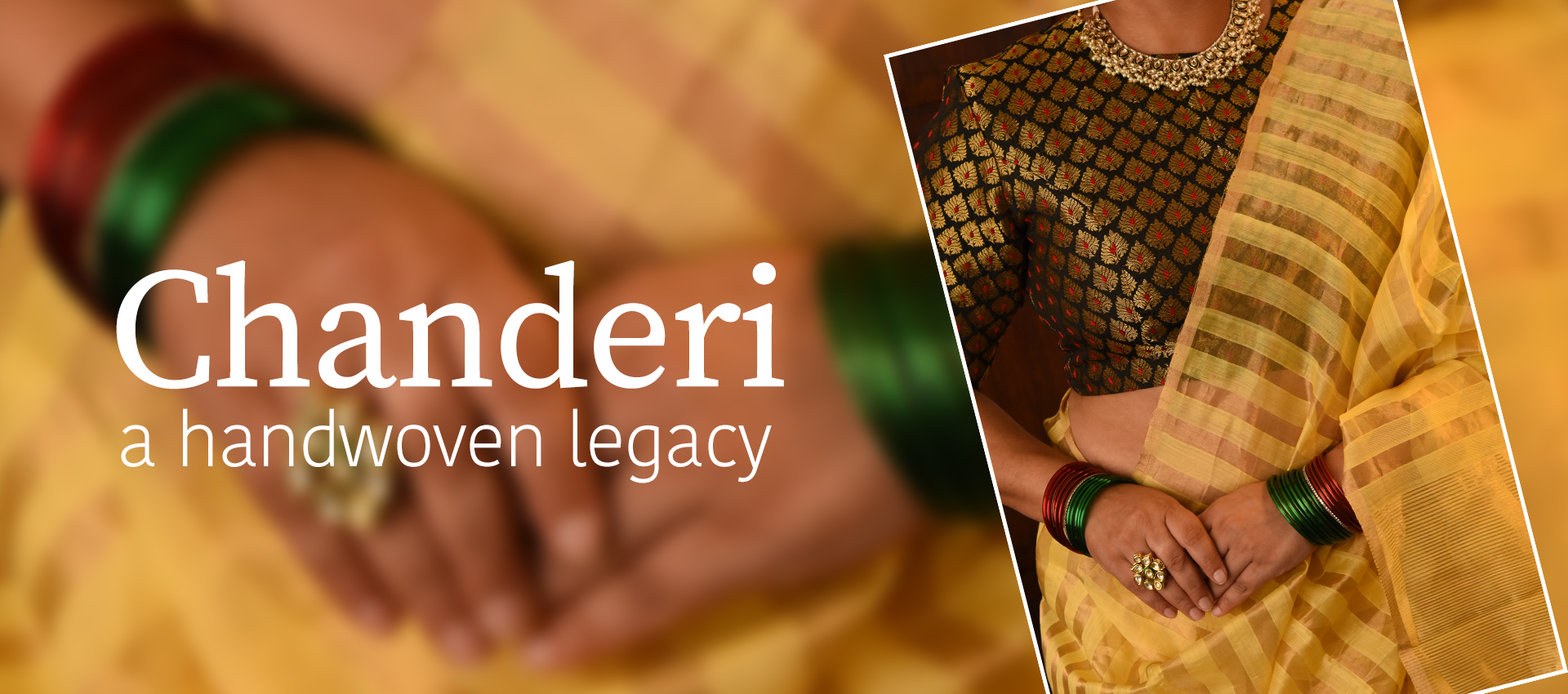
There are some sarees that make a statement through their grandeur, while others win you over with their quiet elegance. The Chanderi saree belongs to the second kind. Lightweight, delicate, slightly translucent and beautifully luminous, Chanderi has a charm that has remained relevant for generations. What makes it even more fascinating is the history behind the fabric. Woven in the historic town of Chanderi in Madhya Pradesh, the Chanderi saree is not simply a beautiful piece of clothing; it represents centuries of Indian weaving traditions, skilled craftsmanship, royal patronage and an extraordinary connection between a place and its textile heritage.
The history of the Chanderi saree is closely connected to the town of Chanderi in Madhya Pradesh. Located between the Malwa and Bundelkhand regions, Chanderi has been an important cultural and trading centre for centuries. Its strategic location brought the town into contact with different rulers, merchants, artisans and cultural influences, all of which contributed to its development as a centre of textile production. UNESCO documentation identifies Chanderi as a major urban centre since at least the 11th century, while its textile traditions have continued through generations of weavers. There is no single historical record that tells us exactly when the first Chanderi saree was woven. Like many traditional Indian crafts, its history developed gradually through generations of knowledge passed from one artisan to another. What is certain is that Chanderi became renowned for its extraordinarily fine fabrics, particularly for their lightness, delicacy and transparency. The fabric was so fine that it developed a reputation for having an almost gossamer-like quality, which eventually became one of the defining characteristics of Chanderi textiles.
The story of Chanderi sarees is also a story of royal India. Fine textiles have always held an important place in Indian royal courts, where fabric was not merely considered clothing but a symbol of wealth, refinement and artistic excellence. Chanderi's delicate textiles became highly valued by royal families and wealthy patrons, including courts associated with Gwalior, Indore and Baroda. This patronage gave skilled weavers an opportunity to work with exceptionally fine yarns and develop intricate designs that demanded considerable time and expertise.
Over time, Chanderi developed its own distinctive design vocabulary. Traditional motifs included delicate flowers, peacocks, geometric forms, buttas and other nature-inspired patterns. Zari was often incorporated into borders and motifs, adding a subtle glow to the otherwise lightweight fabric. Unlike heavily embellished textiles that depend on ornamentation to create impact, Chanderi achieved its beauty through restraint. The combination of fine weaving, delicate motifs, transparency and understated zari created a fabric that looked elegant without ever appearing excessive.
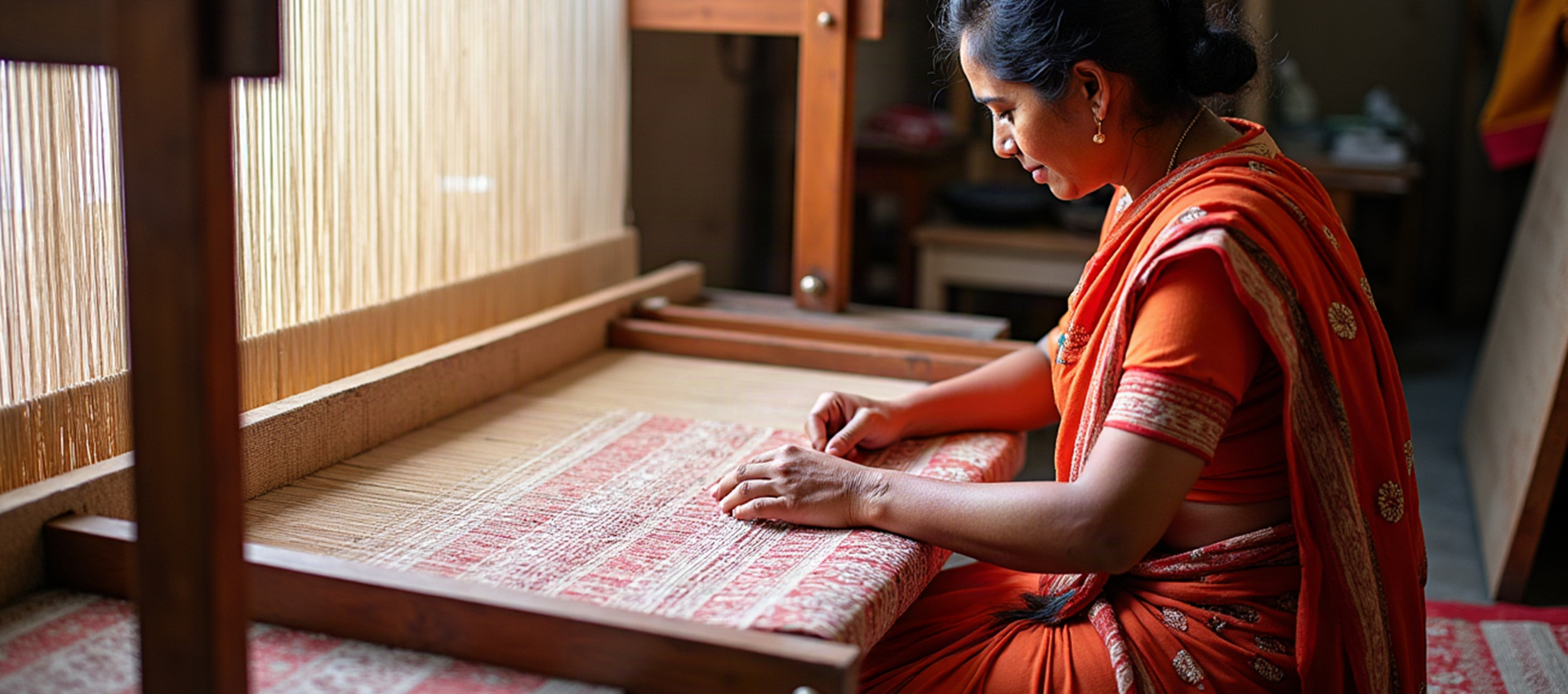
One of the easiest ways to understand the appeal of Chanderi is to experience its texture. A good Chanderi saree feels remarkably light in the hand and has a characteristic sheerness and subtle shine. Traditional Chanderi fabrics have been woven using combinations of silk and cotton, with silk often used for the warp and cotton for the weft. Zari may also be introduced to create traditional borders and motifs. The unique character of Chanderi comes from the relationship between the yarn and the weaving process. It is not simply the material that creates the fabric's appearance. The skill of the weaver, the tension of the yarn, the weaving technique and the placement of motifs all contribute to the final result. This is why an authentic handwoven Chanderi saree has a distinctive character that is difficult to replicate through mass production.
Traditional Chanderi weaving has also used extra-weft techniques to create motifs, while pit looms and frame looms have been used by artisans. Every stage requires attention and precision, which is one reason handwoven textiles carry a value that goes beyond their appearance. When you purchase a handwoven Chanderi saree, you are not simply purchasing fabric; you are supporting a specialised craft and the knowledge of the artisan who created it.
Like every living craft tradition, Chanderi has evolved with time. Historically, fine cotton fabrics played an important role in Chanderi's textile identity. As markets changed and consumer preferences evolved, silk became increasingly important, and silk-cotton combinations became closely associated with the Chanderi weave that many saree lovers know today. The introduction of Japanese silk during the twentieth century also influenced Chanderi weaving. Dyed silk warps combined with cotton wefts helped create the soft, luminous colours that are now commonly associated with Chanderi sarees. This evolution demonstrates something important about Indian handloom traditions: preserving a craft does not necessarily mean keeping it completely unchanged. Traditional weaving survives because artisans and weaving communities are able to adapt while retaining the essential identity of the craft. This is why you can find different varieties of Chanderi today, including Chanderi cotton, Chanderi silk and silk-cotton Chanderi. Each variety has its own texture, fall, transparency and appearance, but they share the distinctive elegance that makes the Chanderi name so recognisable.
The history of Chanderi is not only a story of beauty and royal patronage. It is also a story of survival. Like many Indian handloom traditions, Chanderi weaving faced serious challenges as industrialisation transformed textile production. Mechanised mills could produce fabrics faster and at lower prices, making it increasingly difficult for traditional handloom weavers to compete. Yet the weaving tradition survived. Artisans continued to work on their looms, adapting designs, materials and techniques to changing markets while preserving the essential character of Chanderi.
Royal and institutional support also played a role in sustaining the craft. In the early twentieth century, patronage associated with the Scindia family contributed to the revival and continuation of Chanderi weaving. The survival of the craft is particularly meaningful today because handloom weaving represents much more than an old manufacturing technique. It represents a living form of knowledge. Every generation of weavers learns techniques that cannot always be captured in written instructions. Much of the expertise is developed through observation, practice and years of working at the loom.
The geographical identity of Chanderi became formally recognised when Chanderi Sarees received Geographical Indication registration in India in 2005. The official GI records identify Chanderi Sarees as a registered product from Madhya Pradesh and associate the product with the Chanderi weaving tradition. GI recognition is important because it connects the name of the product to its geographical origin and traditional characteristics. In an increasingly mass-produced textile market, such recognition helps protect the identity of traditional crafts and reminds consumers that the name of a textile can represent a particular place, community and history.
For saree lovers, this is one more reason to understand the difference between simply buying a fabric and consciously choosing an authentic handloom textile. When you buy a genuine Chanderi saree, you are buying something that carries the identity of a historic weaving centre in Madhya Pradesh.
Despite having a history that stretches back generations, Chanderi does not feel like a textile belonging only to the past. That is perhaps its greatest strength. Its lightweight character makes it especially appealing to today's women who want the elegance of a traditional saree without feeling weighed down by heavy fabric or embellishment. A Chanderi saree can work beautifully for everyday occasions, office dressing, festive celebrations, intimate gatherings and more formal events.
A traditional zari border can give it a festive character, while a simpler version can look effortlessly elegant. Its subtle transparency, soft sheen and graceful fall allow it to move easily between traditional and contemporary wardrobes. This versatility is one of the reasons Chanderi continues to attract a new generation of saree wearers. Women today are increasingly interested in knowing where their clothes come from, who made them and what makes the textile special. Chanderi answers all three questions with a fascinating story of place, craftsmanship and continuity.
The future of Chanderi depends on keeping the craft economically and culturally relevant. Supporting handloom weavers, choosing authentic handwoven textiles and educating consumers about traditional crafts are all important parts of that journey. When consumers understand why a handwoven saree costs more than a mass-produced imitation, they are better equipped to appreciate the time, skill and human effort behind it. At the same time, Chanderi must continue to evolve.
Contemporary colours, modern styling and changing preferences can help introduce the fabric to younger audiences without taking away from its traditional identity. This balance between heritage and modernity is what has allowed Chanderi to remain relevant for so long.
The history of the Chanderi saree is ultimately the history of a living Indian craft. From the historic town of Chanderi and its old trading routes to royal courts, generations of skilled weavers, changing textile markets and its eventual GI recognition, the journey of this saree reflects the resilience of Indian handloom. Every handwoven Chanderi saree carries a little of that journey. The delicate yarn, the subtle zari, the traditional motifs and the characteristic lightness are all reminders of the craftsmanship that has been passed down through generations.
At Antarang, we believe that Indian handloom should not simply be preserved as history; it should be worn, appreciated and made part of everyday life. Our handwoven sarees are carefully curated for women who value beautiful textiles, Indian craftsmanship and the stories behind what they wear. If you have always admired the ethereal beauty of Chanderi, this is the perfect time to discover the weave for yourself. Explore Antarang's collection of handwoven sarees at www.myantarang.com and bring home a piece of India's living textile heritage. Because a Chanderi saree is not just something you wear. It is centuries of craftsmanship, woven into something you can carry forward.
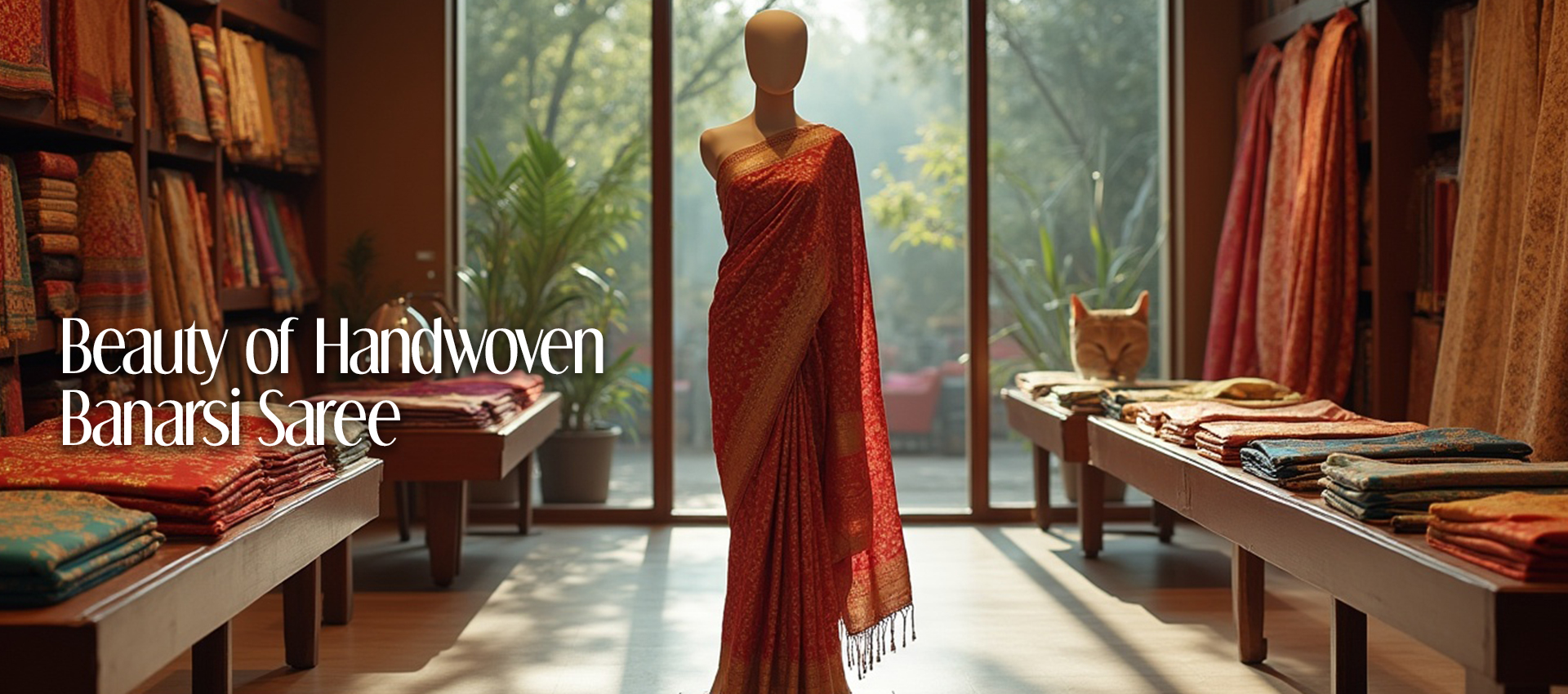
The Complete Guide to Banarasi Sarees: 10 Types Every Saree Lover Should Know
September 28th, 2026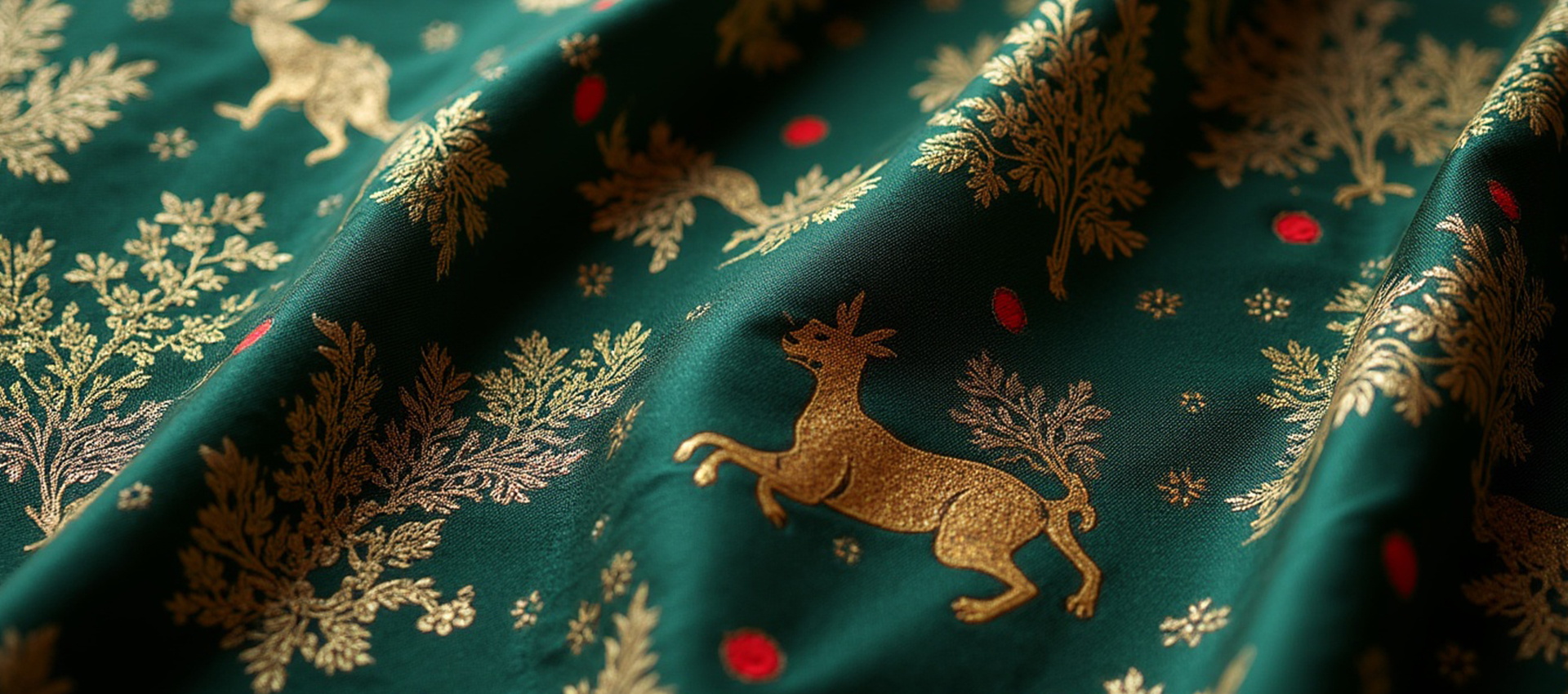
11 Fascinating Facts About Banarasi Sarees You Probably Never Knew
September 24th, 2026
Real vs Fake Banarasi Saree: 9 Ways to Spot Authentic Handloom Weaving
September 17th, 2026
Jacquard Weaving Explained: Why Jacquard Does NOT Mean Powerloom
September 10th, 2026