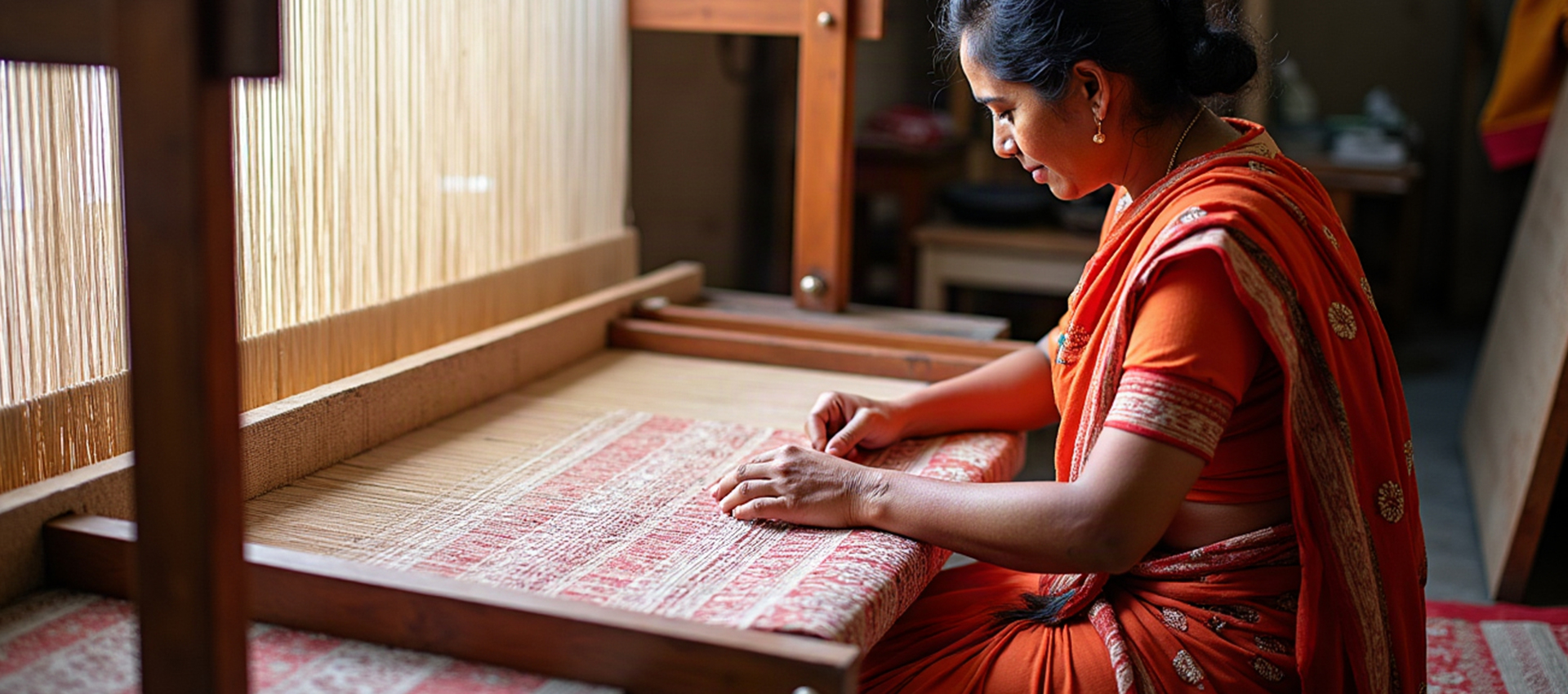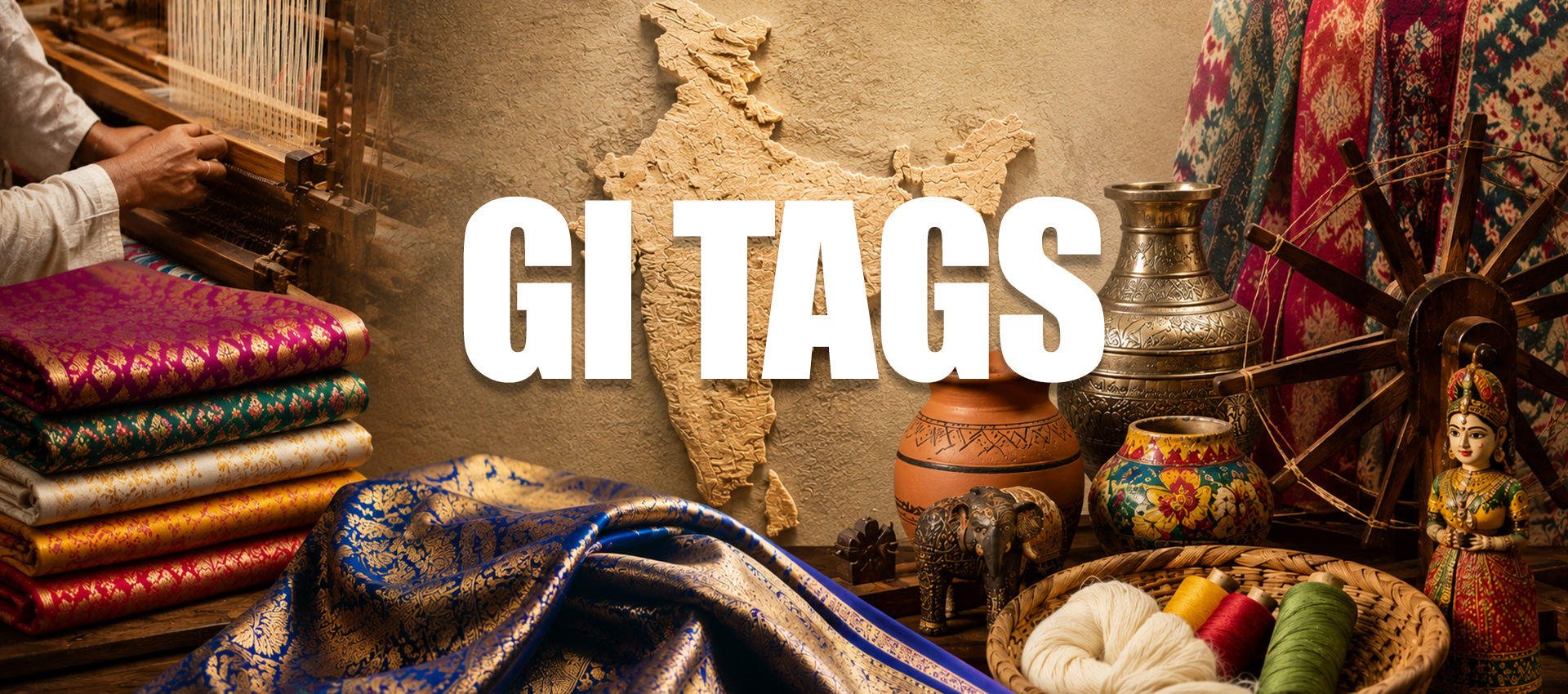
If you've ever browsed for a Banarasi or Kanchipuram silk saree online and noticed the letters "GI tag" mentioned proudly in the description, you've already brushed up against one of the most important, and most underrated, pieces of intellectual property law in Indian fashion. For saree lovers, understanding what a GI tag actually means isn't just trivia — it's the single best tool for telling an authentic handloom weave from a cheap, mass-produced copy.
A Geographical Indication, or GI, is a sign used on products that come from a specific place and carry a quality, reputation, or characteristic that can only be attributed to that origin. Think Champagne, Feta cheese, or Darjeeling tea — the name itself is protected because the place is inseparable from the product. Globally, GIs are recognised under Article 22 of the WTO's TRIPS Agreement, and as a WTO member, India passed its own Geographical Indications of Goods (Registration and Protection) Act in 1999, which came into force in September 2003.
India's very first GI tag went to Darjeeling tea in 2004–05, making it not just India's first GI, but Asia's first tea GI as well. It's a fact worth remembering, because it also tells a great success story: after receiving GI protection, Darjeeling tea reportedly saw its market price rise several times over, turning a regional product into a globally recognised, premium household name. That single case became the blueprint for why India's weaving communities pushed so hard to get their own crafts registered.
From Tea Leaves to Silk Threads
Interestingly, sarees entered the GI story almost immediately. In that very first batch of registrations in 2004–05, alongside Darjeeling tea, India also granted GI status to Kanchipuram Silk Sarees, Chanderi Fabric, and Pochampally Ikat — meaning some of the country's most iconic weaves were protected almost as early as its most famous tea. Since then, the list has only grown: Banarasi sarees and brocades, Paithani from Maharashtra with its signature peacock motifs, Patan Patola from Gujarat, Ilkal from Karnataka, Sambalpuri and Bomkai from Odisha, Jamdani from West Bengal, Maheshwari from Madhya Pradesh, and Kota Doria from Rajasthan are just some of the sarees that now carry legal GI protection.
As of 2026, India has crossed over 650 registered GI tags across agriculture, food, and handicrafts — a huge leap from the mere handful that existed when the Act first came into force. Textile clusters remain some of the biggest beneficiaries, since a GI tag doesn't protect an individual company; it protects an entire community of weavers who have practiced a craft for generations, ensuring that the name "Banarasi" or "Kanchipuram" can only be used by artisans genuinely working within that geographic region.
Why the GI Tag Matters More Than Ever for Saree Buyers
Here's the practical reality every saree shopper should know: a GI tag is not a quality certificate, but it is an origin certificate. It confirms that your saree was made using the traditional technique, in the traditional region, by the community historically associated with that craft — protecting you from buying a power-loom imitation dressed up with a heritage name. This distinction has become especially urgent in recent years. In mid-2025, an Italian luxury label showcased footwear strikingly similar to India's GI-tagged Kolhapuri chappals on an international runway without any acknowledgment of the artisan community behind the design — reigniting a nationwide conversation about how vulnerable India's handloom heritage still is outside its own borders, since GI protection is territorial and doesn't automatically apply overseas.
For handloom lovers, this makes the GI tag more than a bureaucratic detail — it's become a badge of honour and authenticity, almost like the fashion equivalent of a diamond certification. Buyers actively search for terms like "GI tagged sarees," "authentic Kanchipuram silk," and "handloom mark saree" precisely because they want assurance that their money is going toward preserving a real weaving community rather than funding an imitation.
When you're shopping for a handloom saree, a genuine GI-tagged piece usually comes with a few tell-tale signs: a Handloom Mark or Silk Mark tag, a weaver cooperative reference, slight natural irregularities along the selvedge that no machine can replicate, and sometimes even a traceable certificate of authenticity. It's worth remembering that a GI tag confirms origin and tradition, not the individual quality of every piece — so pairing your GI knowledge with a trustworthy seller is still the smartest way to shop.
A Legacy Worth Protecting — and Wearing
What started as a single tea leaf's legal protection in 2004 has grown into a movement safeguarding hundreds of India's most treasured textile traditions. Every time you choose a GI-tagged Banarasi, Patola, or Kanchipuram saree over an unmarked lookalike, you're doing more than making a purchase — you're directly supporting the weaver families and centuries-old techniques that these tags were created to protect. In a market flooded with imitations, the GI tag remains the simplest, most powerful way to know that the saree draped over your shoulder carries a real story, a real place, and real hands behind it.
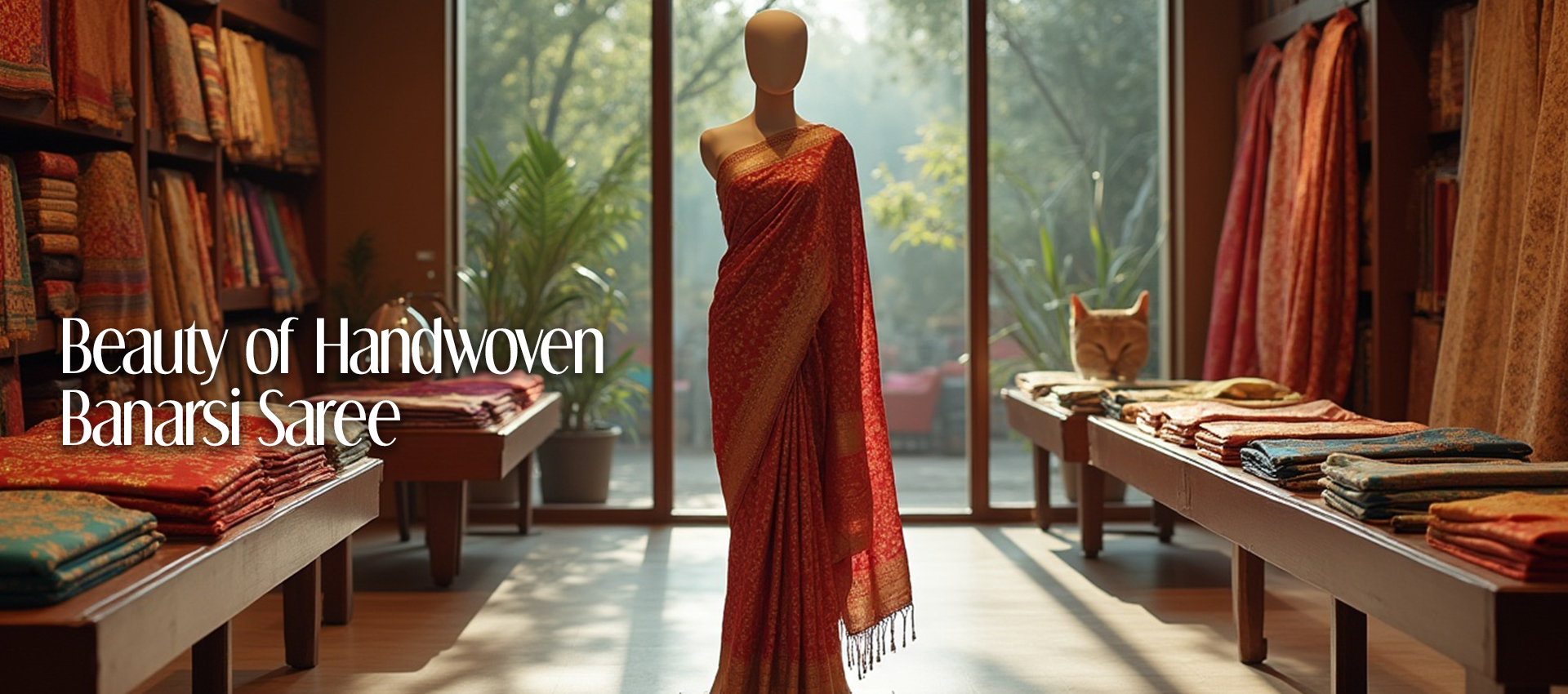
The Complete Guide to Banarasi Sarees: 10 Types Every Saree Lover Should Know
September 28th, 2026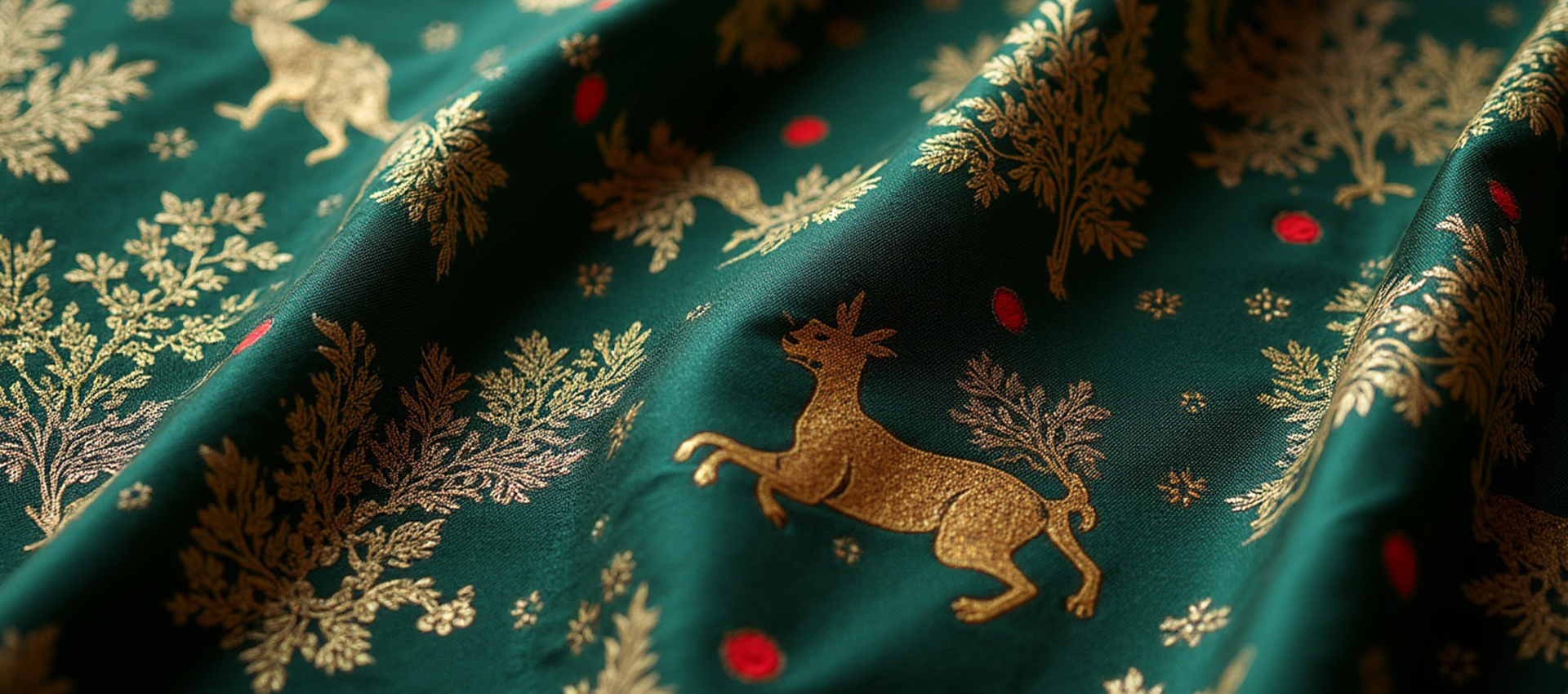
11 Fascinating Facts About Banarasi Sarees You Probably Never Knew
September 24th, 2026
Real vs Fake Banarasi Saree: 9 Ways to Spot Authentic Handloom Weaving
September 17th, 2026
Jacquard Weaving Explained: Why Jacquard Does NOT Mean Powerloom
September 10th, 2026